
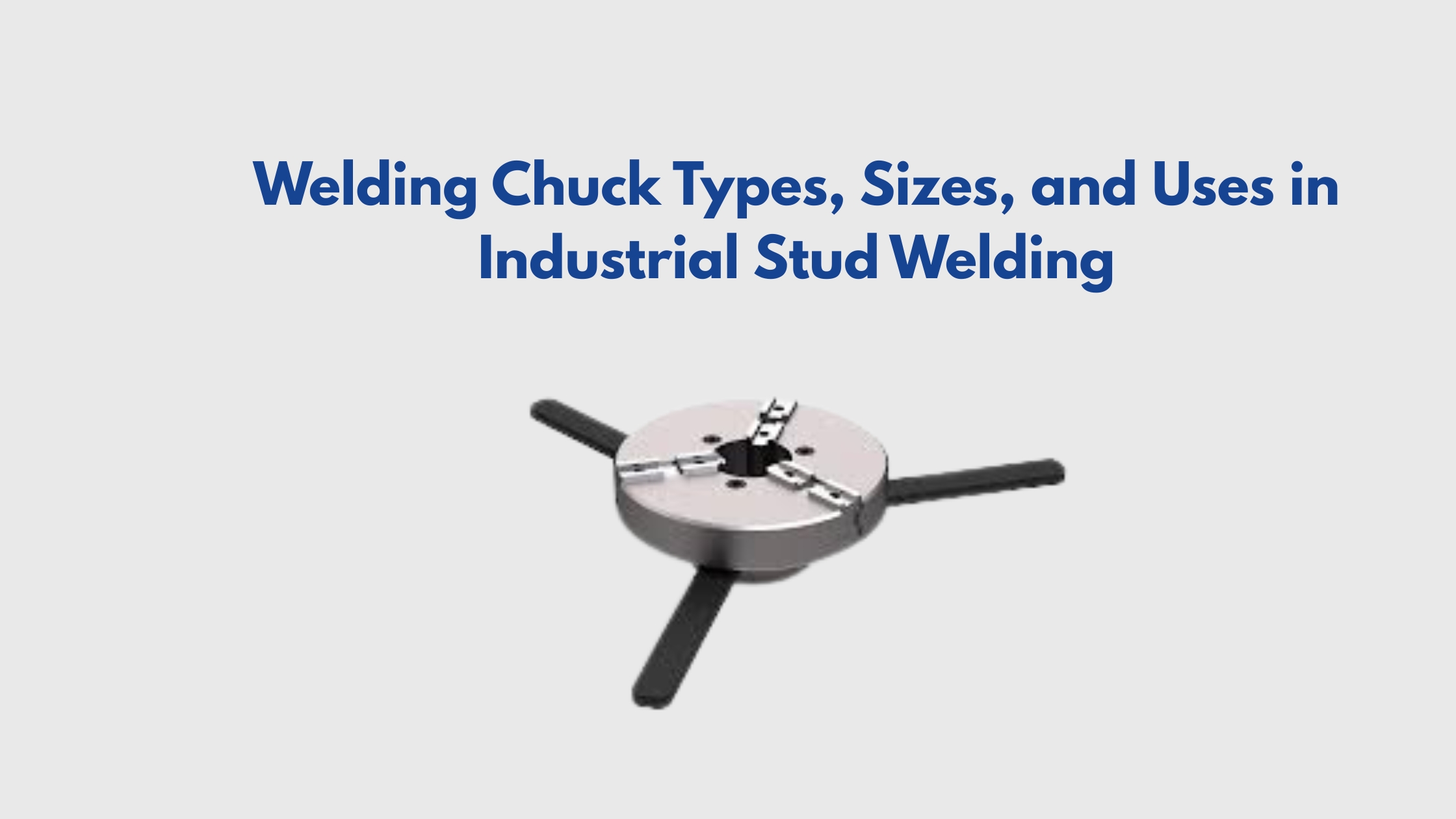
If you’ve ever had a stud slip, misfire, or weld at the wrong angle, the problem often traces back to one component: the welding chuck.
It’s a small part that carries a lot of responsibility. The chuck is what holds the stud in place during the welding cycle — and if it doesn’t fit correctly, nothing else about your setup matters. Selecting the right welding chuck for your application is one of the most practical steps you can take to enhance weld quality and minimize rework.
At Complete Stud Welding, we supply chucks for a wide range of stud welding guns, materials, and project types. This guide covers the main types, how sizing works, and what to consider when selecting the right chuck for your application.
What Is a Welding Chuck and What Does It Do?
A welding chuck is the component at the front end of a stud welding gun that grips and positions the stud during the weld. It holds the stud firmly, maintains the correct plunge depth, and ensures consistent contact between the stud and base material.
In drawn ARC and capacitor discharge (CD) stud welding, the chuck is under direct thermal and mechanical stress during every cycle. A worn or incorrect chuck leads to inconsistent arc gaps, stud misalignment, and failed welds — all of which cost time and money on the job.
The right chucks welding setup keeps everything repeatable: same position, same plunge, same result, every time.
Types of Welding Chucks
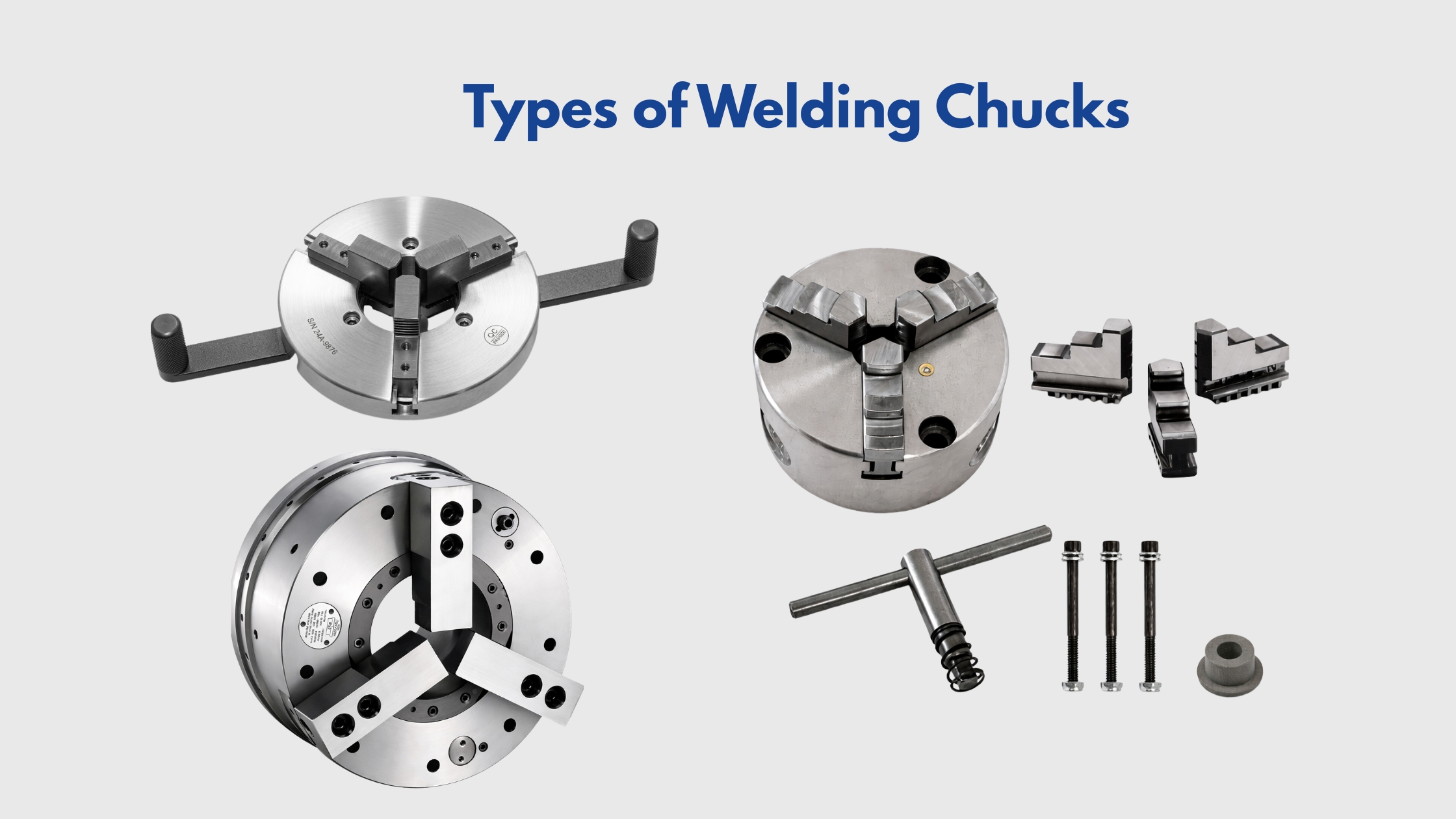
1. Standard Stud Welding Chuck
The stud welding chuck is the most common type used in drawn arc and CD welding applications. It’s designed to fit a specific stud diameter and thread type, holding the stud securely through the weld cycle. Most guns ship with a standard chuck, but replacement and size-specific options are essential as stud specs change across a project.
Standard welding chucks are available in a wide range of sizes to match metric and imperial stud diameters. Using the wrong size — even slightly — affects grip consistency and weld quality.
2. Welding Positioner Chuck
A welding positioner chuck is used when the welding setup includes automated or semi-automated positioning systems. These chucks allow components to rotate or move into the correct welding position.
Many fabrication shops utilize a welding positioner with a chuck to maintain consistent weld angles and enhance production speed. A weld positioner chuck helps reduce operator fatigue and enhances welding precision during repetitive operations.
3. Pipe Welding Chuck
A pipe welding chuck is designed for applications where studs are being welded to curved or cylindrical surfaces, most commonly pipe. Standard flat-face setups don’t account for the curvature of a pipe, which creates inconsistent arc gaps and unreliable welds.
Pipe welding chucks compensate for this by accommodating the geometry of the workpiece. They’re commonly used in petrochemical, shipbuilding, and industrial piping applications where stud welding to pipe is routine. If you’re welding to curved surfaces regularly, this is a non-negotiable upgrade over a standard chuck.
4. Welding Gripper Chucks
Welding gripper chucks are built for applications that require a more secure hold on the stud during the weld cycle. The gripper mechanism applies additional clamping force around the stud, which helps in situations where vibration, position angle, or stud geometry makes standard chucks less reliable.
These are particularly useful in overhead or vertical welding positions where gravity works against a standard grip. A grip chuck in these orientations keeps the stud from shifting before or during the ARC, which is exactly where most positional weld failures happen.
5. Adjustable Chuck
An adjustable chuck gives the operator flexibility to accommodate different stud sizes without swapping out the entire chuck. These are especially useful on job sites where multiple stud diameters are in play, reducing downtime between changeovers.
The tradeoff is that an adjustable chuck may not deliver the same precision fit as a dedicated fixed-size chuck for high-volume, single-spec production work. For varied field applications, however, the versatility is often worth it.
Chuck Welding Sizes: How to Get It Right
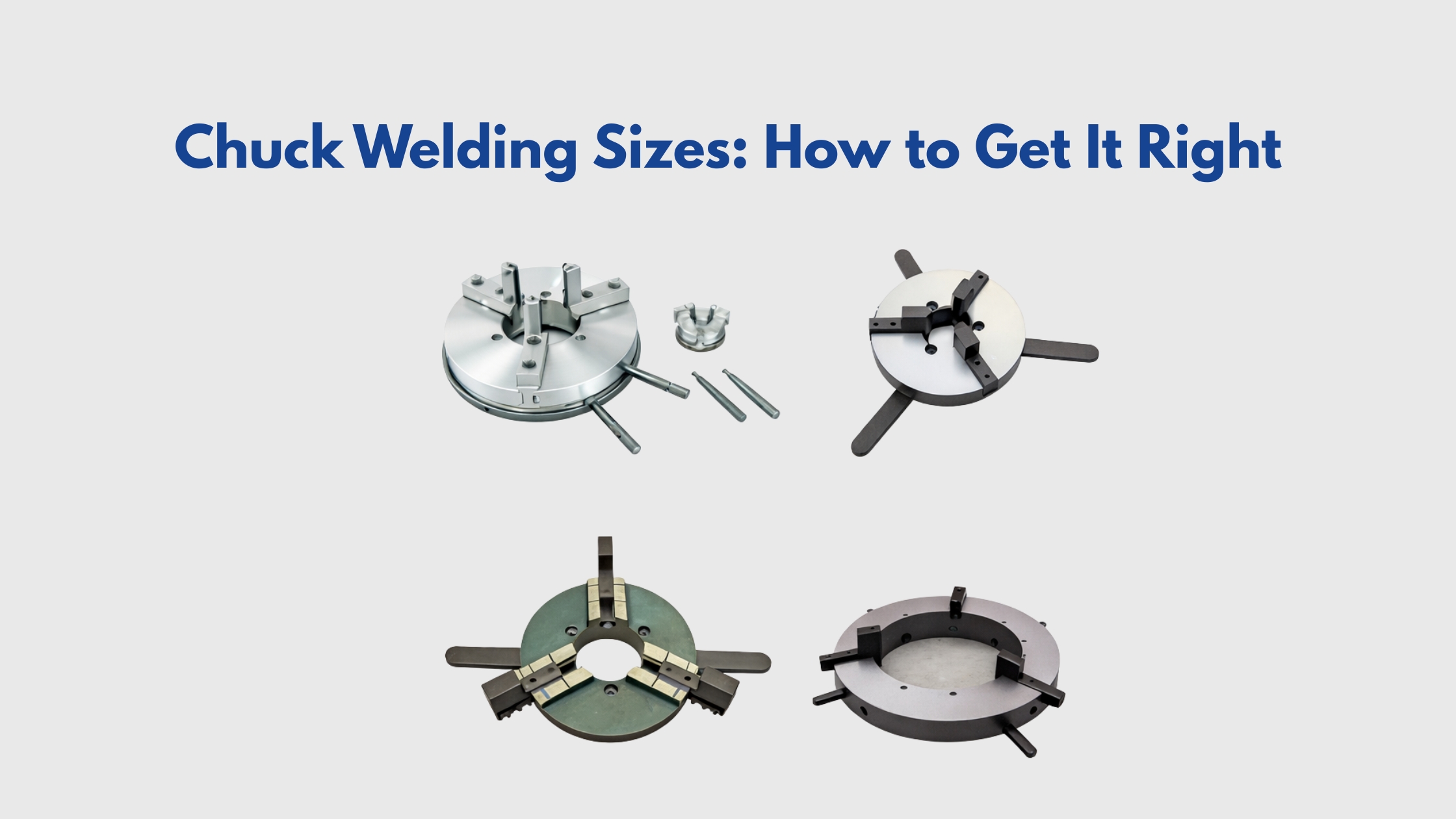
Chuck welding setup starts with the stud diameter. Most manufacturers specify chuck sizes by the stud diameter they’re designed to hold — expressed in fractions of an inch or in millimeters, depending on the system.
A few key sizing rules:
- The chuck bore should match the stud shank diameter exactly. Undersized bores damage the stud. Oversized bores allow movement during the weld.
- Thread type matters. Fine and coarse thread studs of the same diameter may require different chuck geometries.
- For chuck grip applications, confirm the grip range before ordering — especially for adjustable or gripper-style chucks.
Getting sizing right isn’t complicated, but it does require knowing exactly what stud you’re welding. When in doubt, consult the gun manufacturer’s spec sheet or contact a supplier directly.
Uses of Welding Chucks in Industrial Applications
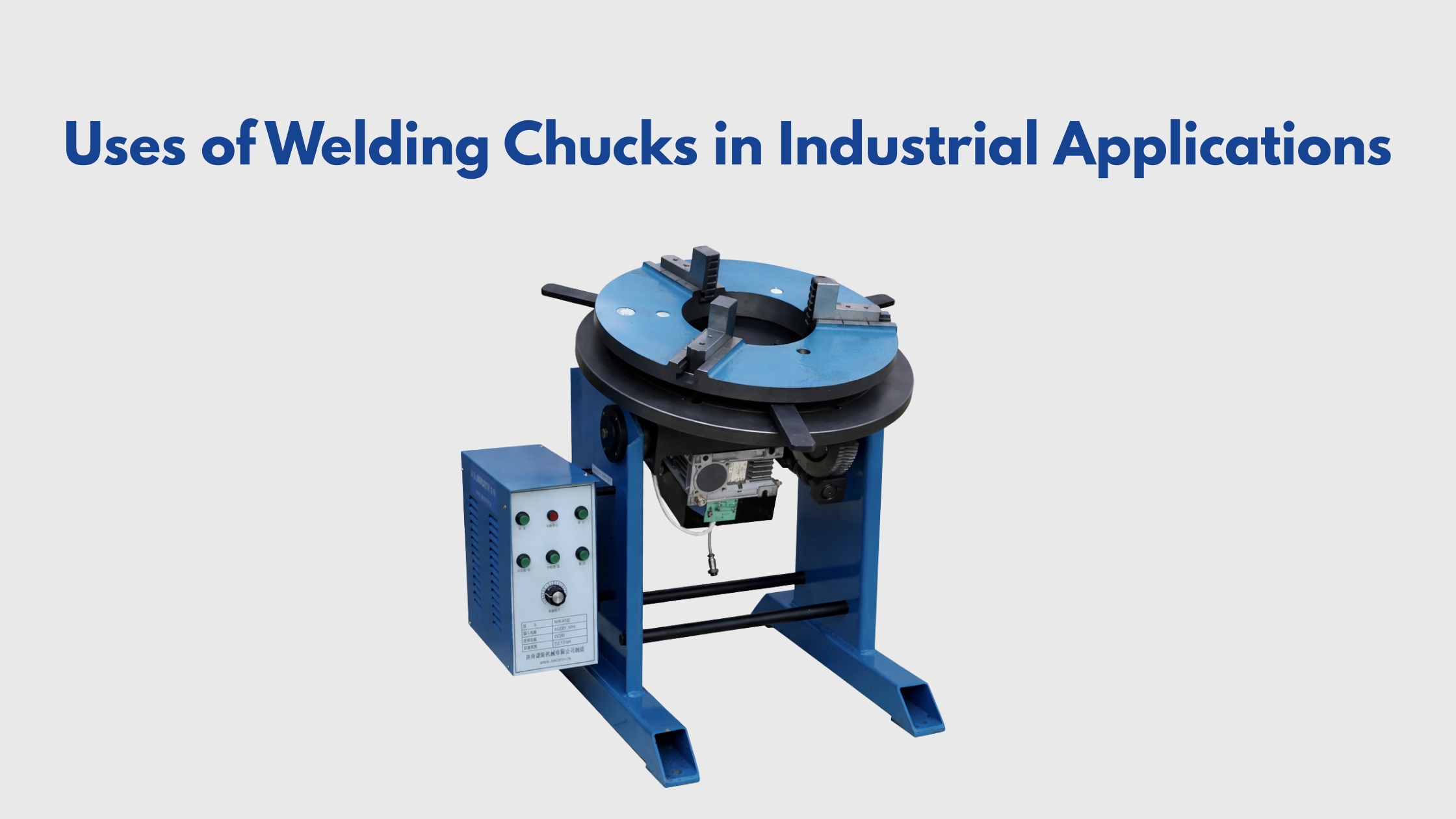
Industrial facilities rely on welding chucks across many sectors where stud welding is required for structural attachment and assembly.
Common applications include:
1. Construction and Structural Steel
Stud welding is widely used in structural steel fabrication, where a reliable stud welding chuck ensures fast and secure attachment of studs to beams and plates.
2. Manufacturing and Fabrication
Production lines often integrate welding positioner chuck systems to automate welding processes and maintain consistent positioning.
3. Pipe and Pipeline Fabrication
In pipe welding environments, pipe welding chucks hold cylindrical components firmly while welding operations are performed.
4. Heavy Equipment Production
Manufacturers working with heavy components rely on durable welding gripper chucks and a strong grip chuck design to maintain stability during high-power welding cycles.
Signs Your Welding Chuck Needs Replacement
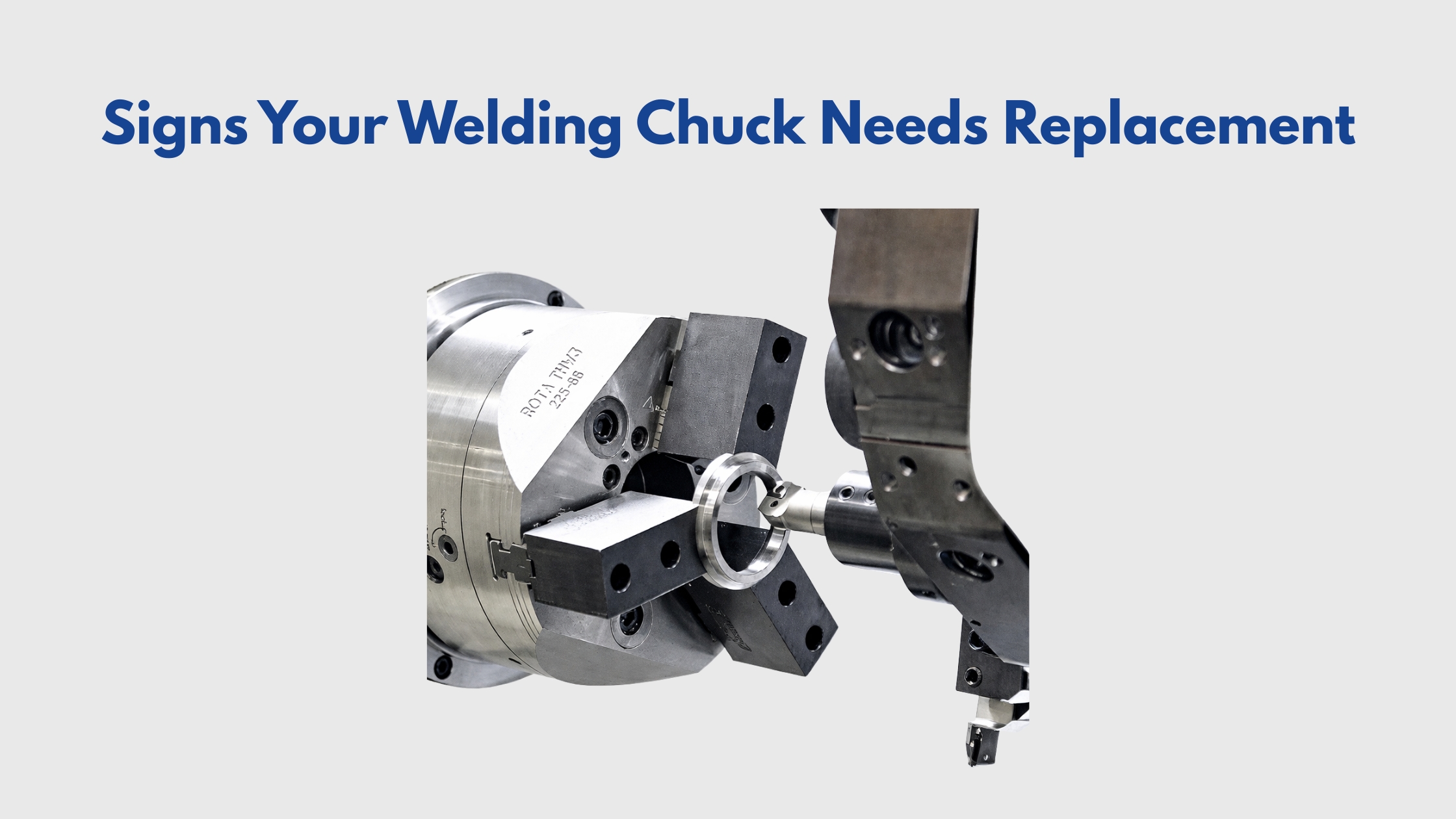
Chucks wear with use. Here’s what to look for:
- Inconsistent weld quality — If welds that were previously reliable start showing voids or poor fusion, check the chuck first.
- Visible wear or deformation — Heat cycles cause metal fatigue over time. A visibly worn chuck should be replaced immediately.
- Stud movement before firing — If the stud shifts in the chuck before the weld cycle completes, the grip is gone.
- Difficulty seating studs — A chuck that’s hard to load is either dirty, damaged, or the wrong size.
Replacing a worn welding chuck is one of the lowest-cost, highest-impact maintenance tasks in stud welding. It’s a small part, but neglecting it is expensive.
Choosing the Right Welding Chucks for Your Application
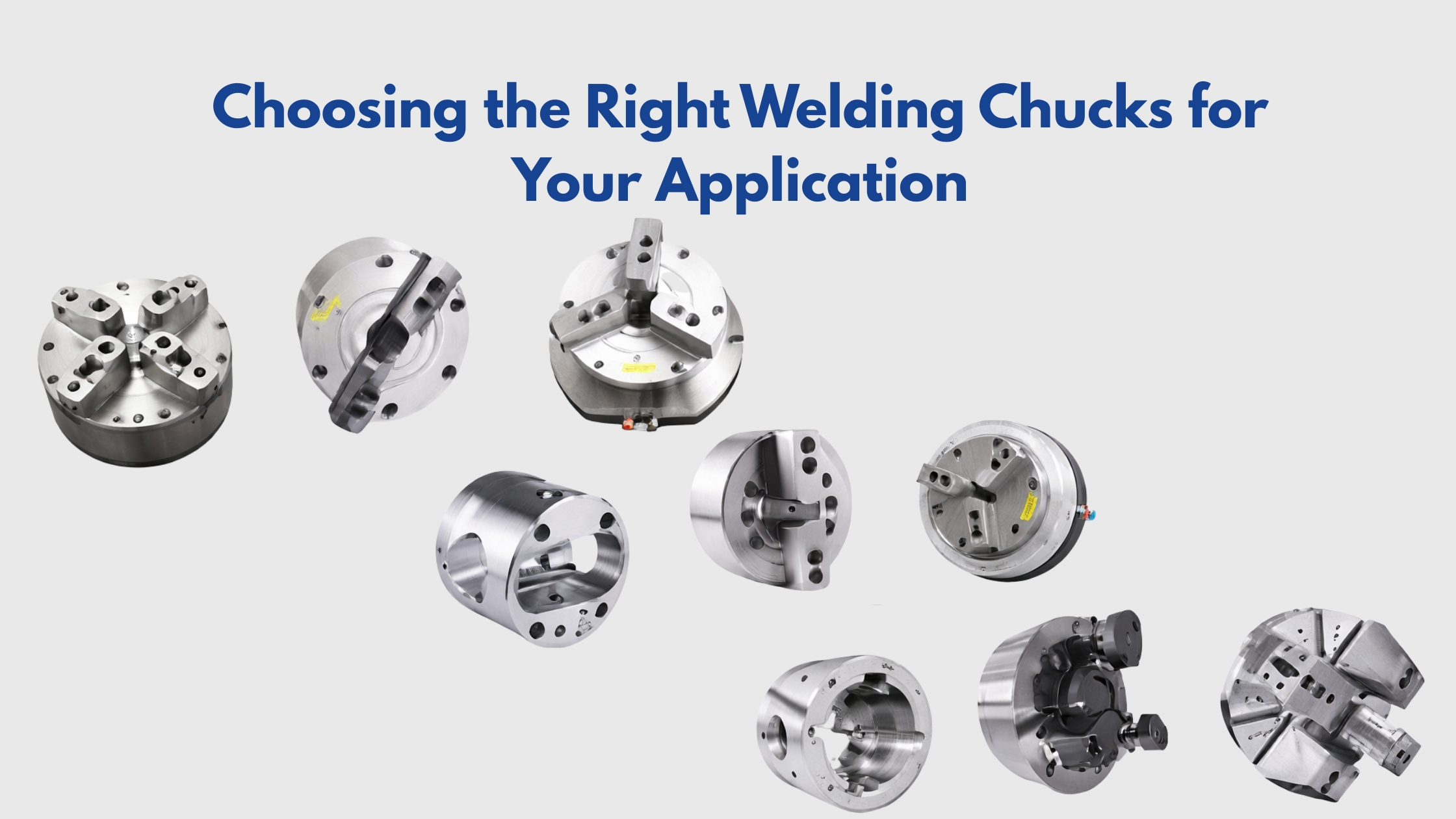
Selecting the correct welding chuck depends on the specific welding application and equipment configuration. Key considerations include:
- Stud diameter compatibility
- Type of welding system being used
- Required gripping strength
- Frequency of production use
- Equipment compatibility, such as a weld positioner chuck
An adjustable chuck may be beneficial in facilities that work with multiple stud sizes, while specialized applications may require dedicated pipe welding chuck designs.
Here’s a simple decision framework:
- Standard production work with consistent stud specs → Fixed-size stud welding chuck
- Welding to pipe or curved surfaces → Pipe welding chuck
- Overhead, vertical, or awkward positions → Welding gripper chucks
- Multiple stud sizes on a single project → Adjustable chuck
- Positioner-based production setups → Welding positioner chuck matched to your equipment
The right welding chucks aren’t just an accessory — they’re a direct input into weld quality. Choosing based on application rather than availability is always the better approach. Working with trusted suppliers ensures that the selected welding chucks meet industry performance and durability standards.
Get Expert Help with Welding Chuck Selection
At Complete Stud Welding, we stock a full range of welding chucks — from standard stud welding chucks to pipe welding chucks, gripper chucks, adjustable chucks, and positioner chucks — for virtually every gun make, model, and stud specification on the market.
Our team understands that a wrong chuck isn’t just an inconvenience — it’s a production problem. That’s why we make it straightforward to find exactly what you need, get it quickly, and get back to work.
Whether you’re replacing a worn chuck on a familiar gun or outfitting a new setup from scratch, Complete Stud Welding has the inventory, the knowledge, and the support to help you get it right the first time.
Conclusion
Choosing the correct welding chuck can significantly impact weld consistency and production efficiency. The specialists at Complete Stud Welding have extensive experience supplying industrial stud welding equipment and accessories for demanding applications.
If you need help selecting the right stud welding chuck, pipe welding chucks, welding gripper chucks, or a welding positioner with chuck, contact the team today.
Browse our full chuck selection at completestudweld.com or call us directly at 216-904-4008 — we’re ready to help you find the right fit.

Comments are closed.