
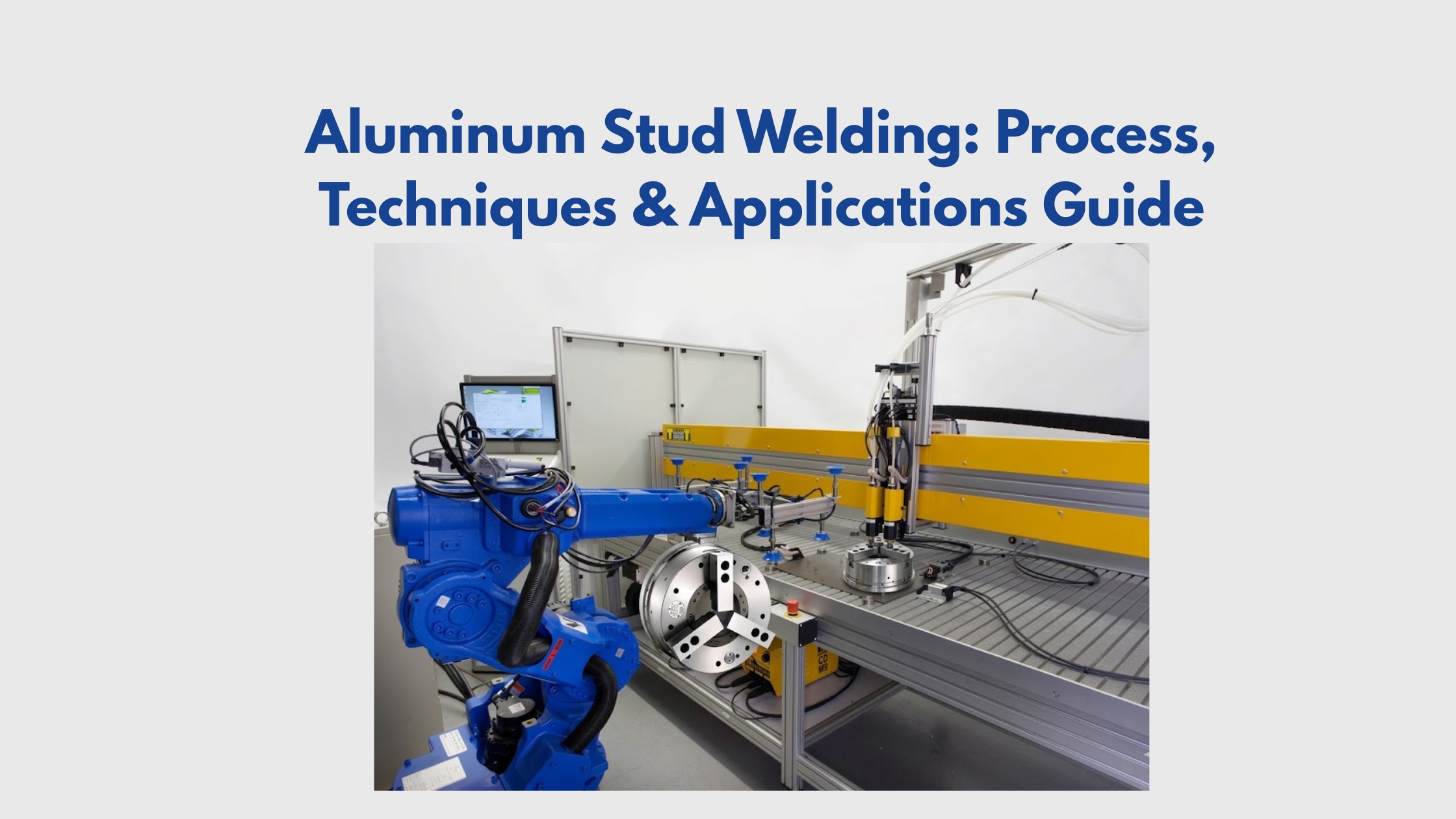
Aluminum stud welding is a fast and reliable fastening method used across aerospace, automotive, electronics, and construction industries to permanently attach aluminum studs to base metals — without drilling, punching, or through-holes.
With its speed, clean finish, and structural integrity, aluminum stud welding has become the go-to solution for engineers and fabricators who demand precision and efficiency in every weld. Using advanced stud welding equipment, manufacturers can achieve reliable welds without drilling or tapping, making the process faster, cleaner, and highly productive.
What is Aluminum Stud Welding?
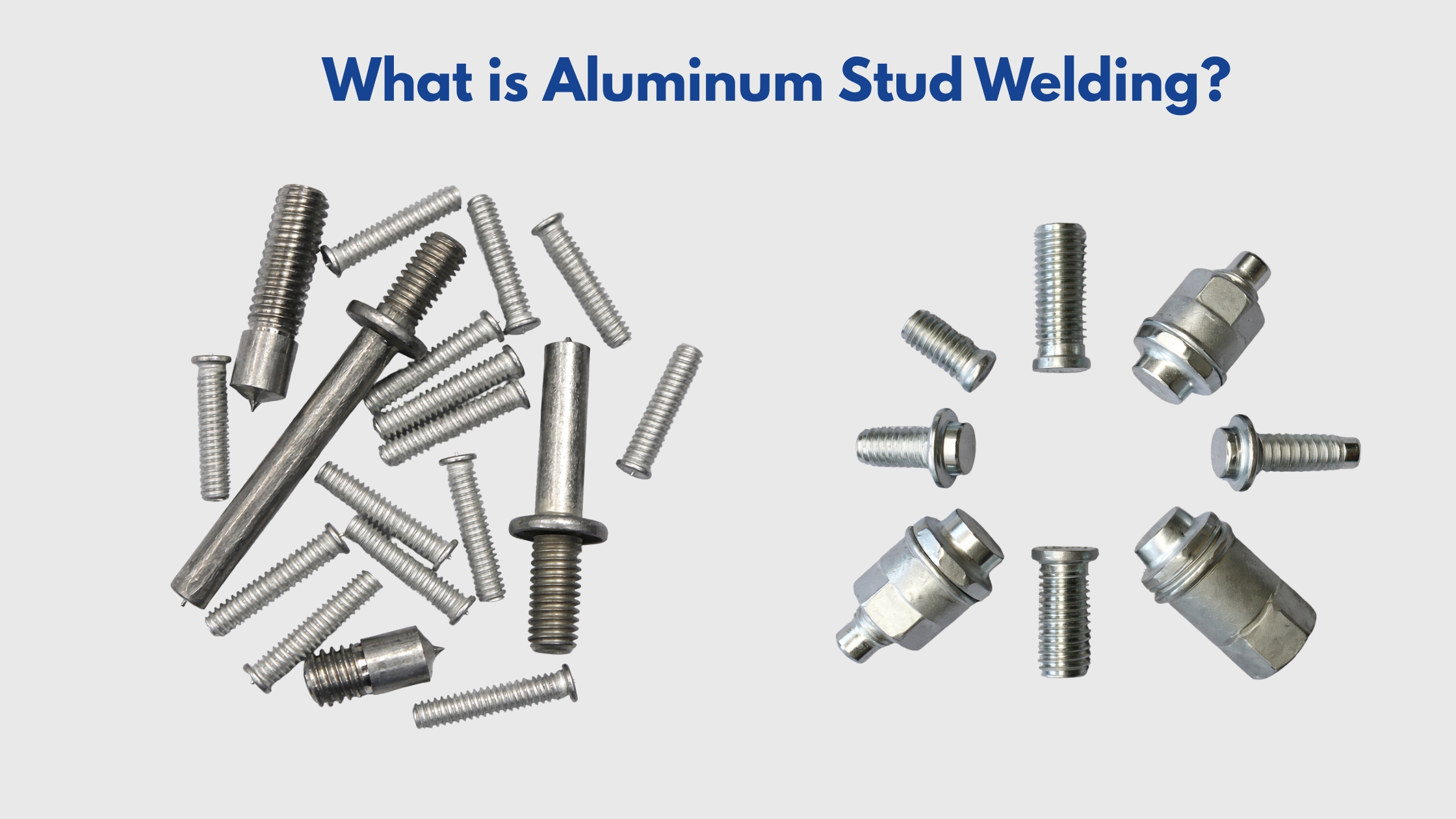
Before understanding the applications, it is important to understand stud welding and how it works with aluminum.
Aluminum Stud Welding is a specialized ARC or capacitor discharge welding process where a metal fastener (weld stud) is fused to an aluminum base metal using an electric ARC or capacitor discharge energy. The stud and base material are momentarily melted and then forged together to create a strong bond. The result is a full-fused, load-bearing joint that is often stronger than the parent material itself.
Unlike traditional fastening methods that require drilling or tapping, the stud welding process attaches the fastener in a single step. This reduces labor time and maintains the structural integrity of aluminum components.
Key characteristics of the aluminum stud welding process include:
- Fast weld cycle time
- Minimal base metal distortion
- Strong and permanent attachment
- Clean the weld surface with minimal finishing
- No need for backside access
Because aluminum has high thermal conductivity, the welding parameters and equipment used must be designed specifically for aluminum materials.
The Two Primary Aluminum Stud Welding Processes
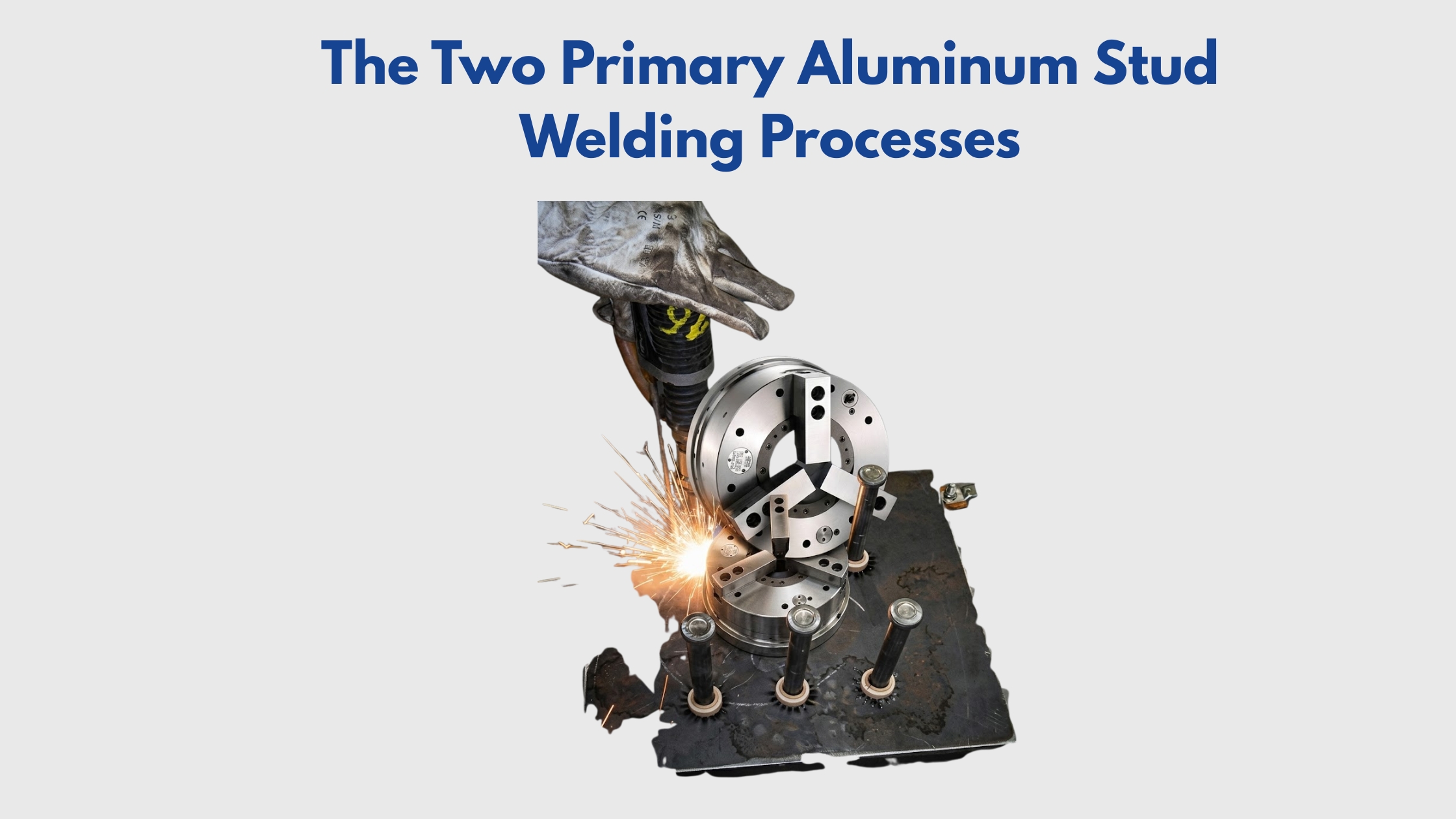
CD Stud Welding (Capacitor Discharge Stud Welding)
CD stud welding — short for Capacitor Discharge stud welding — is the most widely used process for aluminum stud welding applications.
In this method, a bank of capacitors stores electrical energy and releases it in a precisely controlled, millisecond-duration arc. This extremely short weld cycle minimizes heat input, making it ideal for thin aluminum sheets where distortion control is critical.
The CD stud welding process is well-suited for:
- Thin-gauge aluminum panels (as thin as 0.8mm base metal)
- Electronic enclosures and housings
- Automotive body panels and interior trim
- Consumer electronics and appliance manufacturing
- Decorative architectural aluminum assemblies
Because CD stud welding creates a weld in under 10 milliseconds, the back surface of the base material often shows no mark, scorch, or deformation — a finish requirement in many cosmetic aluminum applications.
Here are some benefits, including:
- Ideal for thin aluminum materials
- Minimal heat distortion
- High-speed production welding
- Clean weld appearance
ARC Stud Welding for Aluminum
ARC stud welding uses a sustained arc between the stud and the base metal to create a full fusion weld.
When applied to aluminum, the ARC stud welding process typically requires inert shielding gas (argon or helium) to protect the weld pool from atmospheric contamination and to break up the oxide layer that naturally forms on aluminum surfaces.
ARC stud welding on aluminum is best suited for:
- Heavier structural aluminum components
- Marine and offshore aluminum fabrication
- Structural connections in aluminum building systems
- Industrial machinery with thicker aluminum base metals
ARC stud welding produces a larger heat-affected zone (HAZ) compared to CD stud welding. It is typically reserved for thicker aluminum substrates where the added heat input is manageable, and the base metal thickness supports the full weld fusion required.
Advantages of ARC stud welding include:
- Suitable for larger diameter studs
- Strong weld strength
- Effective for heavy industrial applications
- Compatible with thicker aluminum materials
How the Aluminum Stud Welding Process Works
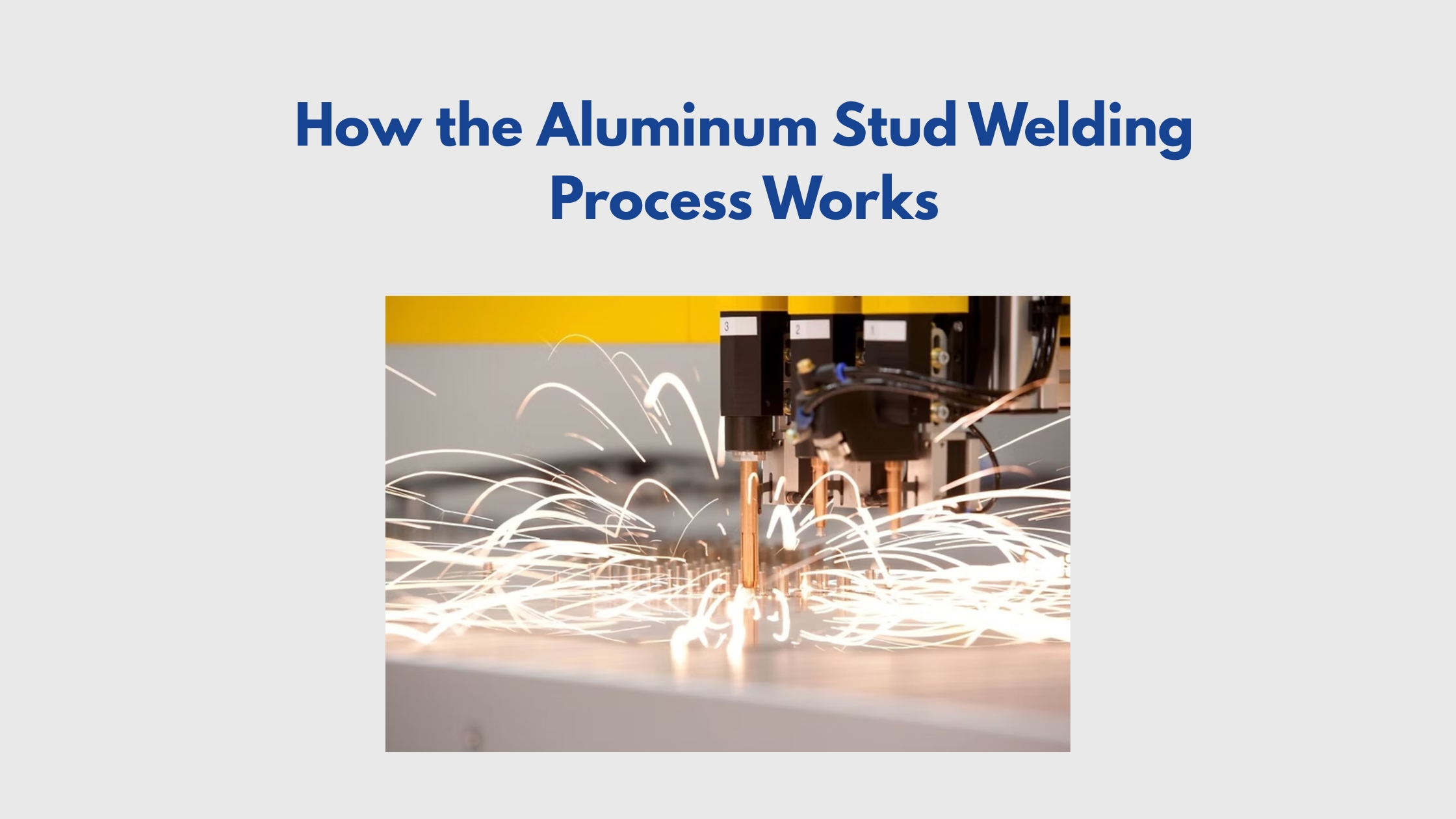
The aluminum stud welding process uses controlled electrical energy to fuse the stud to the aluminum surface. Specialized stud welding equipment ensures precise control of the weld cycle. The basic stud welding process follows these steps:
- Positioning the Stud
The stud is placed into a stud welding gun attached to the stud welding machine.
- Triggering the Weld Cycle
When the trigger is pressed, an electrical current flows through the stud.
- Arc Formation
The arc briefly melts both the stud base and the aluminum workpiece.
- Forging the Weld
The stud is pushed into the molten pool to form a strong metallurgical bond.
- Solidification
The weld cools rapidly, creating a secure and permanent fastener attachment.
Using a reliable aluminum stud welding machine ensures consistent weld quality and repeatability across large production runs.
Equipment Used in Aluminum Stud Welding
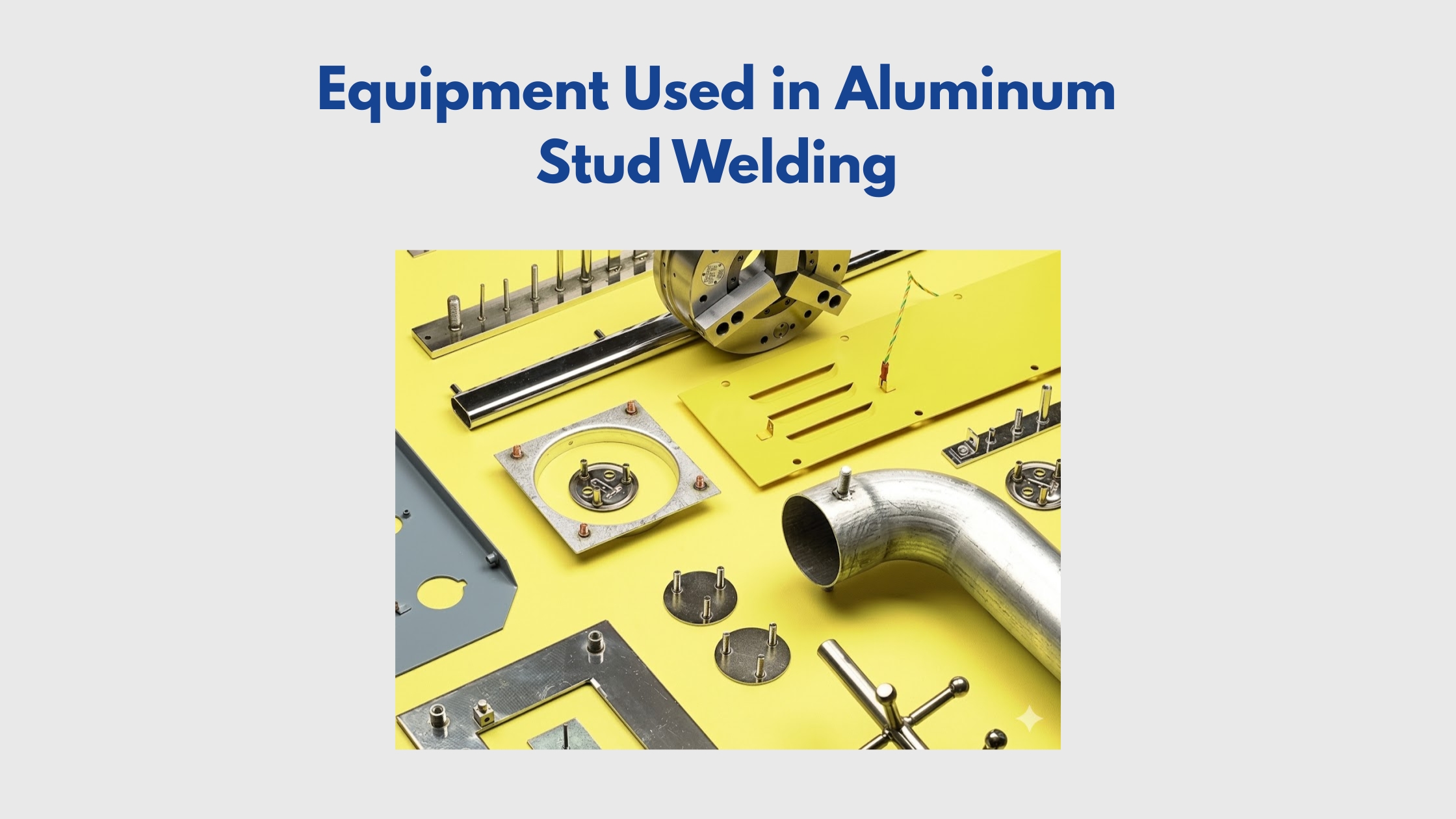
Successful aluminum stud welding requires the right tools and equipment designed to handle aluminum’s unique welding characteristics.
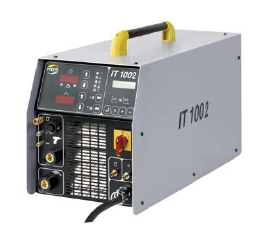
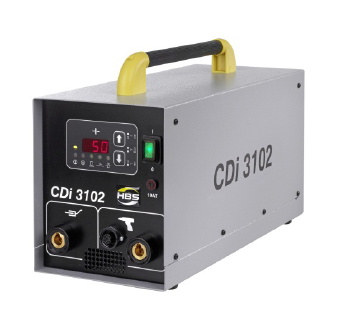
1. Aluminum Stud Welding Machine
An aluminum stud welding machine controls the entire weld cycle, including current, timing, and lift.
These machines provide:
- Precise weld energy control
- Adjustable welding parameters
- Consistent weld quality
- High productivity in manufacturing environments
Advanced stud welding machine systems are often used in automated production lines.
2. Aluminum Stud Welding Gun
The aluminum stud welding gun is a handheld or automated tool that holds and positions the stud during welding. A professional stud welding gun allows operators to:
- Position studs accurately
- Maintain proper weld pressure
- Control the welding trigger
- Ensure repeatable weld quality
Modern stud welding equipment is designed for durability and ergonomic operation, especially in high-volume manufacturing.
Applications of Aluminum Stud Welding
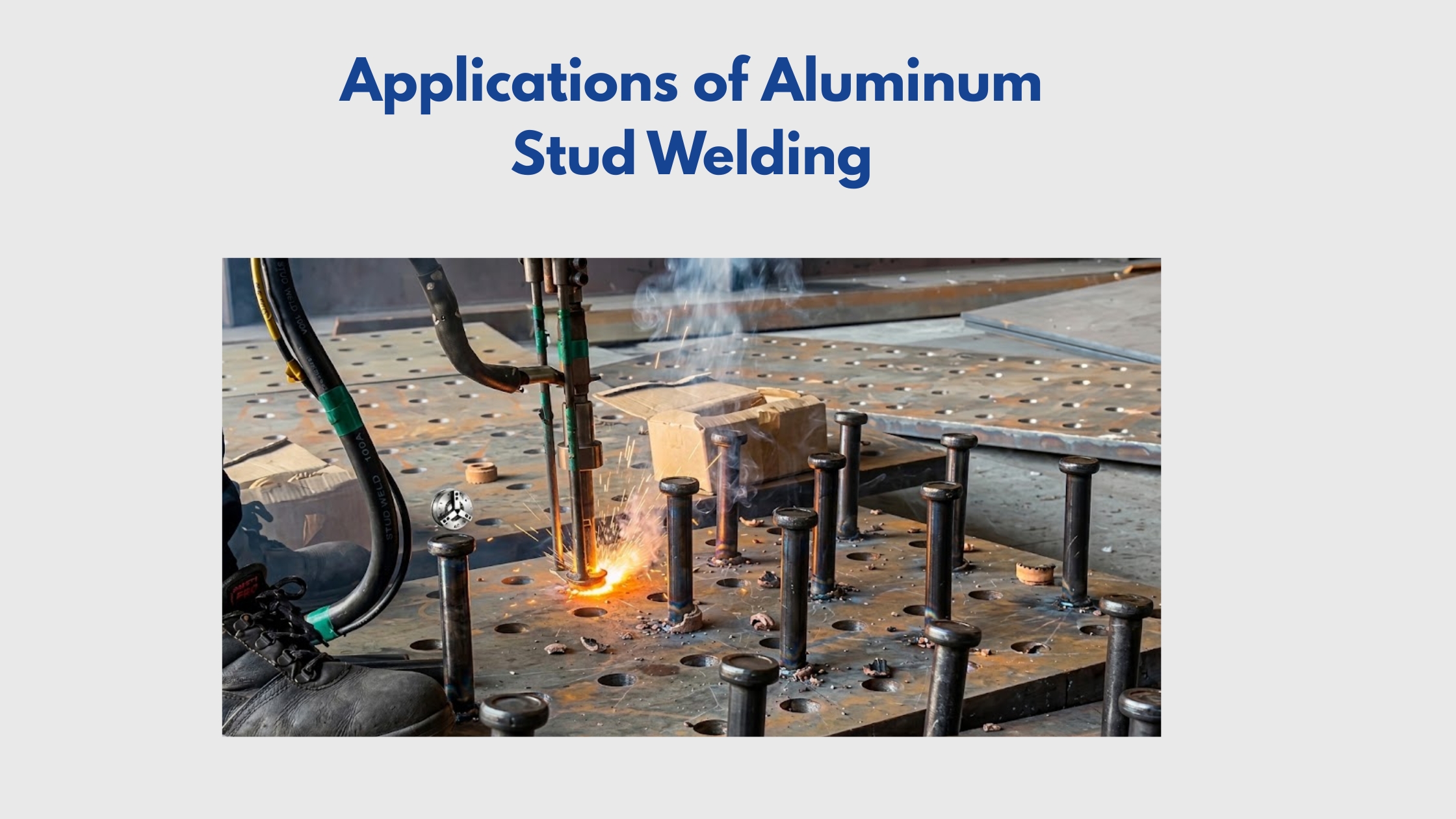
The aluminum stud welding process is widely used across industries where aluminum structures require strong and reliable fastening. Here are the key industries using aluminum stud welding:
Aerospace & Defense
Aerospace manufacturers rely on aluminum stud welding to attach fasteners to aircraft fuselage panels, interior brackets, and structural ribs — all without compromising the integrity of thin aluminum skins. The CD stud welding process is particularly valued in aerospace for its minimal heat footprint and elimination of backside marking.
Automotive Manufacturing
From body-in-white construction to EV battery enclosures, automotive OEMs and tier suppliers use aluminum stud welding extensively to attach wiring harness clips, mounting bosses, ground studs, and decorative trim elements to aluminum stampings. The speed of the stud welding process aligns with high-volume production line demands.
Electronics & Electrical
Aluminum stud welding is widely used in electronics enclosures, switchgear panels, and electrical cabinets to create secure, vibration-resistant mounting points for internal components. The clean, mark-free finish produced by CD stud welding preserves the aesthetic requirements of customer-facing panels.
Marine & Structural Fabrication
Marine builders and structural fabricators use ARC stud welding on aluminum to attach deck hardware, handrails, support brackets, and structural connectors to aluminum hulls and superstructures. The full-penetration fusion achieved by ARC stud welding on thicker aluminum substrates delivers the strength and corrosion resistance required in harsh marine environments.
Construction & Architecture
Aluminum stud welding supports curtain wall systems, facade cladding, HVAC connections, and insulation attachment in commercial construction. Insulation pins — a specialized stud form — are welded by CD or ARC processes to aluminum structural members, then used to mechanically secure insulation panels without adhesives or mechanical penetrations.
Benefits of Aluminum Stud Welding
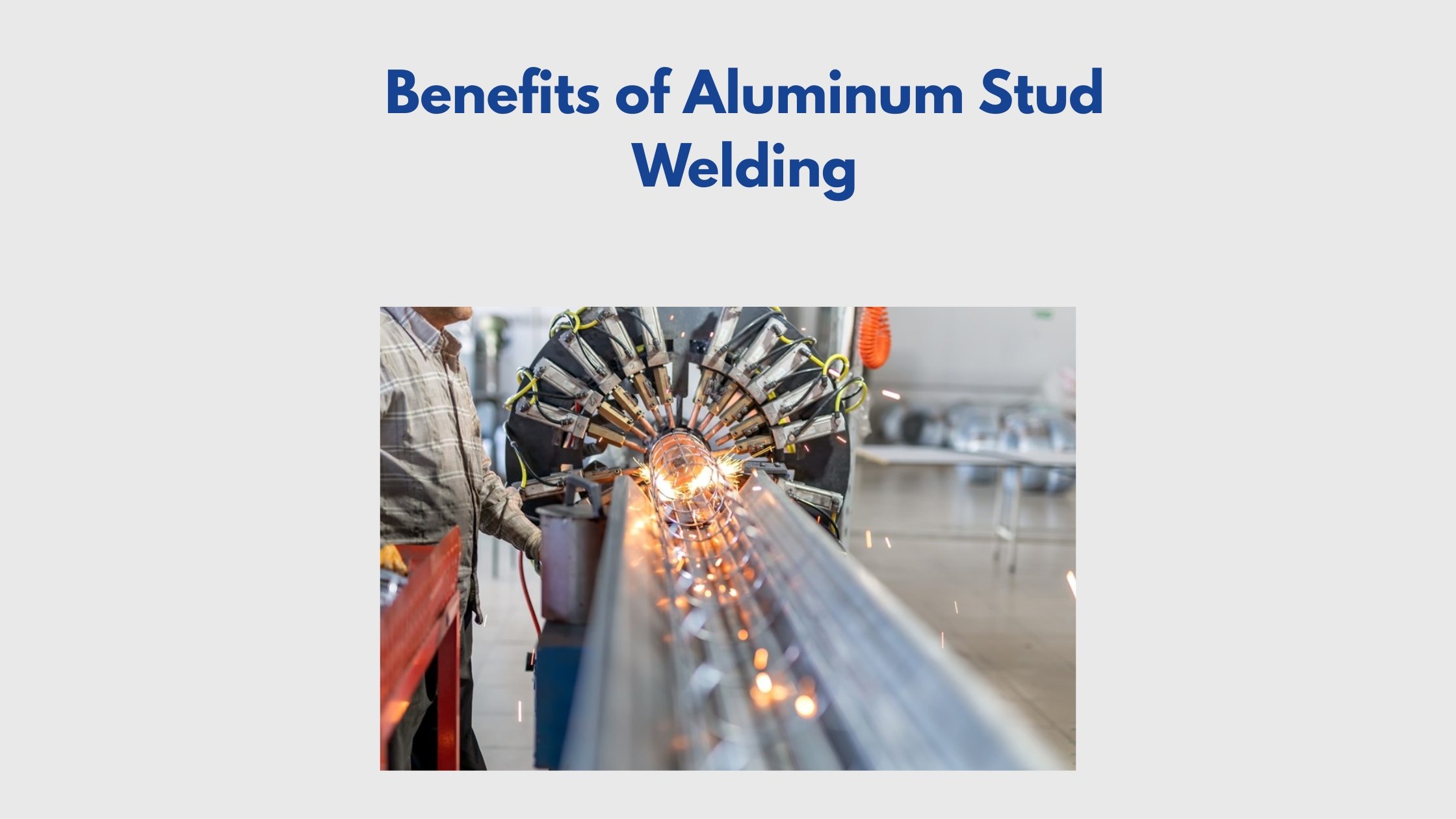
The popularity of aluminum stud welding continues to grow due to several important advantages.
Speed and Efficiency
The stud welding process attaches studs in milliseconds, increasing production speed.
Strong Weld Integrity
Properly performed ARC stud welding and CD stud welding produce durable and reliable welds.
No Drilling Required
The process eliminates the need for drilling or tapping holes.
Improved Appearance
Since welding occurs from one side, the opposite side of the material remains clean and undamaged.
Reduced Manufacturing Costs
Using modern stud welding equipment reduces labor, material handling, and production time.
Final Thoughts
Aluminum stud welding is a precision-driven process that rewards careful material selection, proper equipment configuration, and disciplined operating procedures.
Are you setting up a new aluminum stud welding line? Upgrading old equipment or troubleshooting an existing stud welding process? Complete Stud Welding has the application knowledge and product depth to support your operation.
Complete Stud Welding provides industry-leading stud welding equipment, weld studs, accessories, and expert support — all under one roof. Whether you need aluminum stud welding machines, CD stud welding systems, or full-service stud welding services, we deliver precision, speed, and reliability.
Call us at 216-904-4008 or email us at sales@completestudweld.com.
Comments are closed.