
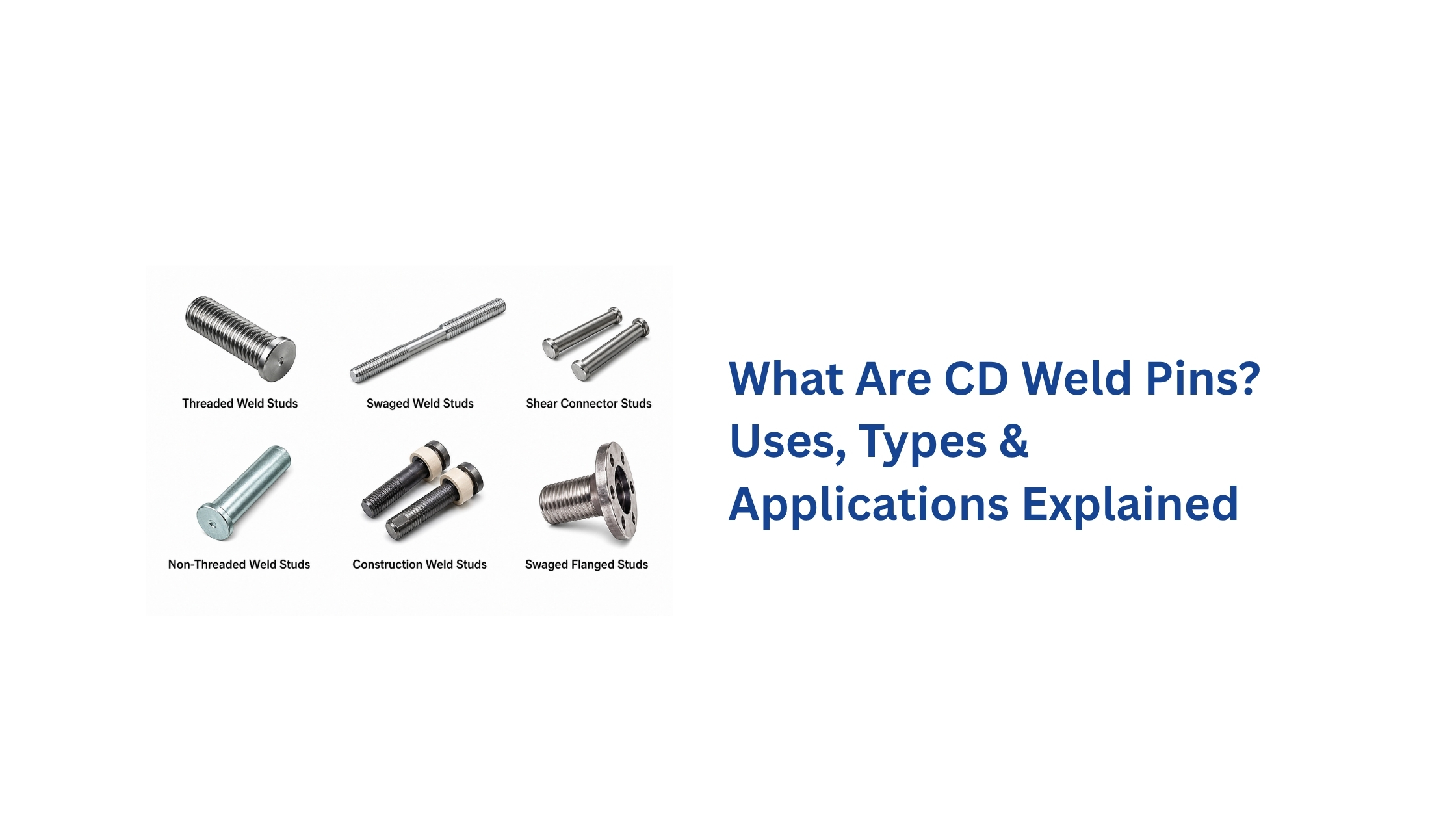
CD weld pins are compact, high-performance fasteners used across industrial insulation and sheet metal applications. Welded using the capacitor discharge (CD) stud welding process, these pins offer a fast, clean, and damage-free attachment method. From HVAC ductwork and boilers to industrial ovens and cold equipment, CD weld pins are the go-to solution when reliable insulation anchoring is needed without compromise.
What Are CD Weld Pins?
CD weld pins (capacitor discharge weld pins) are metal fasteners designed to be welded onto a surface using CD welding technology. This method uses stored electrical energy to create a rapid weld, making CD weld pins ideal for thin materials and precision applications.
These weld pins are commonly used in insulation systems, sheet metal fabrication, and HVAC installations. The process, known as CD stud welding, ensures minimal heat impact while creating strong, durable bonds.
Key Features of CD Weld Pins
- Fast welding cycle (milliseconds)
- Minimal surface damage
- Strong and consistent bonding
- Ideal for thin sheet metals
- Clean and aesthetic finish
Because of these benefits, capacitor discharge weld pins are widely preferred over traditional fastening methods.
How Does the CD Welding Process Work?
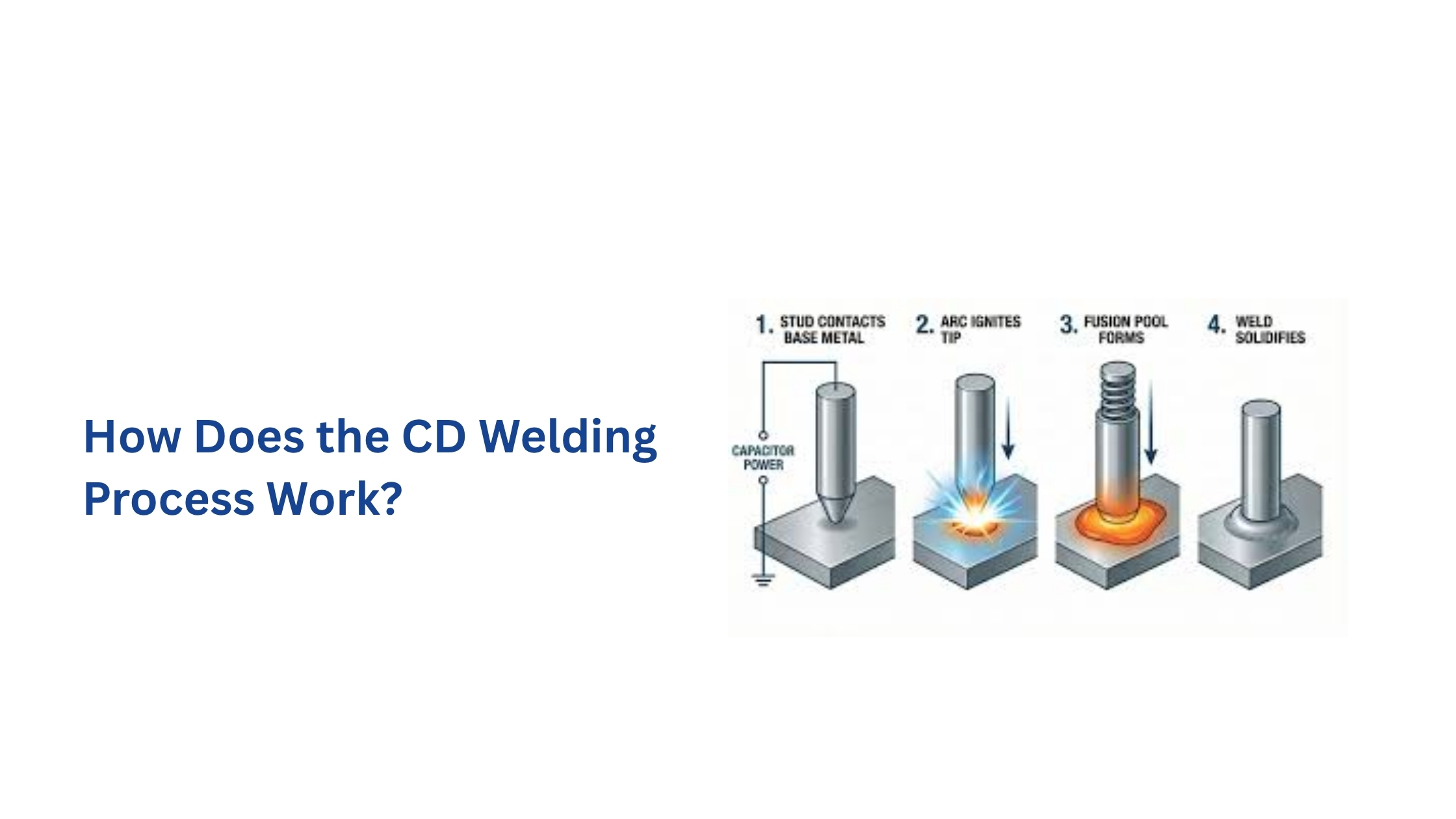
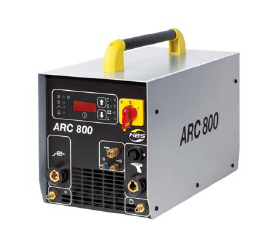
Understanding CD welding is crucial to appreciating why these pins excel in demanding environments. In the capacitor discharge process, a stud welder — commonly called an insulation pin welder or pin welder — stores an electrical charge in capacitors. When the welding pin is placed against the base metal, and the trigger is pulled, the stored energy discharges in a fraction of a second — typically 3 to 6 milliseconds.
This rapid energy release melts the tip of the welding pin and a small area of the base metal simultaneously, then spring pressure drives them together to form a full-fusion weld. The key advantages of this process include:
- Minimal heat-affected zone — ideal for thin gauge sheet metal
- No reverse-side marking or burn-through
- Extremely fast cycle time — hundreds of pins per hour
- No flux, ferrules, or shielding gas required
- Consistent, repeatable weld quality
Types of CD Weld Pins
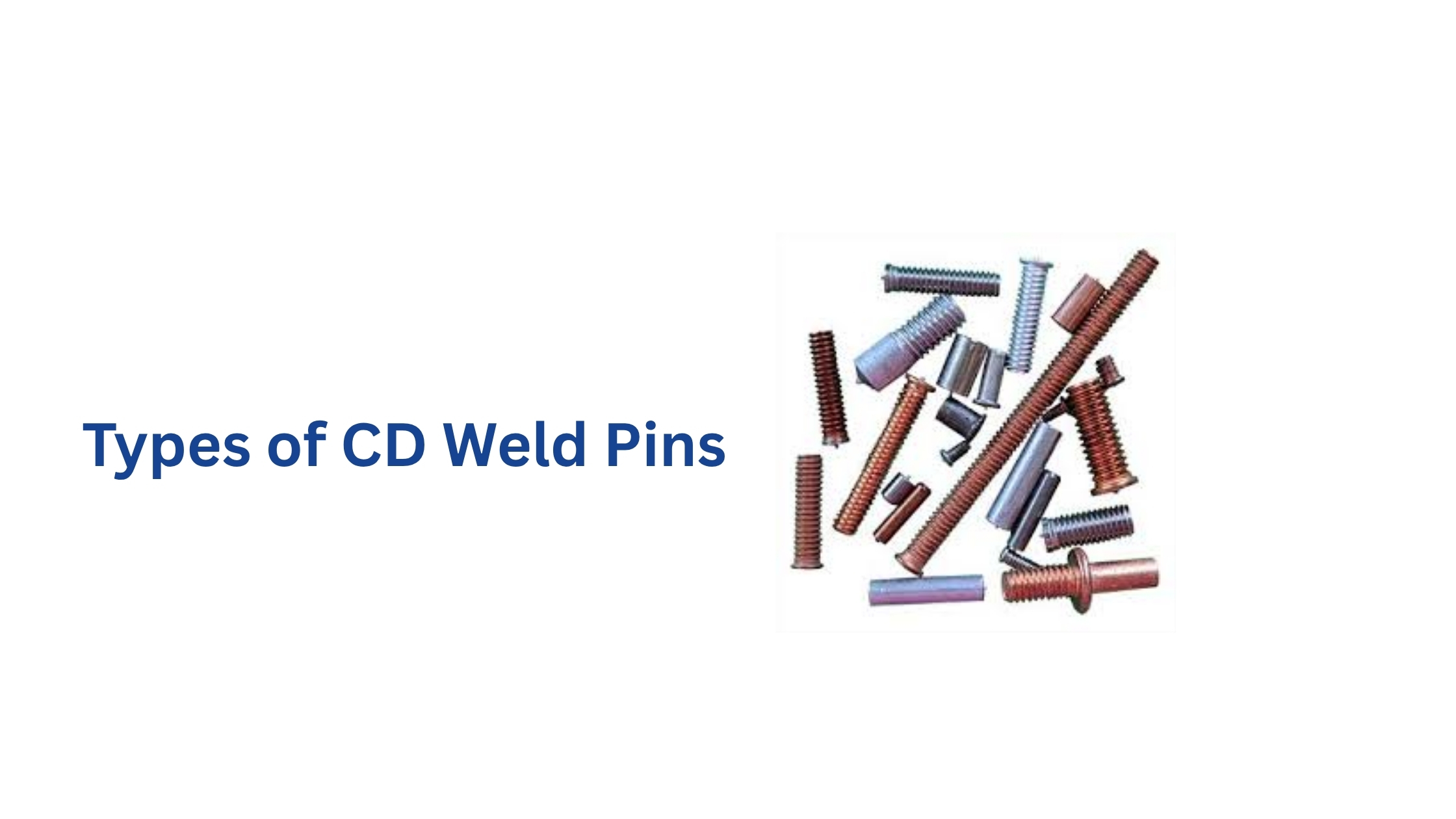
Not all CD welding pins are the same. The right choice depends on your base material, insulation type, operating environment, and load requirements. Here is a breakdown of the main types:
By Gauge (Pin Diameter)
CD weld pins are available in two standard gauges:
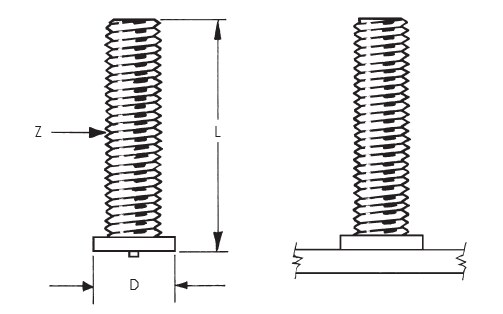
- 10 Gauge (0.135″ diameter): Designed for heavier insulation and higher load applications. Available in lengths from 1″ to 10″ with a flange diameter of 0.220″. Ideal for thicker blankets and board insulation.
- 12 Gauge (0.105″ diameter): A lighter-duty option suited for thinner insulation materials. Available in lengths from 0.75″ to 9″ with a flange diameter of 0.175″.
By Material
Material selection for capacitor discharge weld pins is critical for compatibility and corrosion resistance:
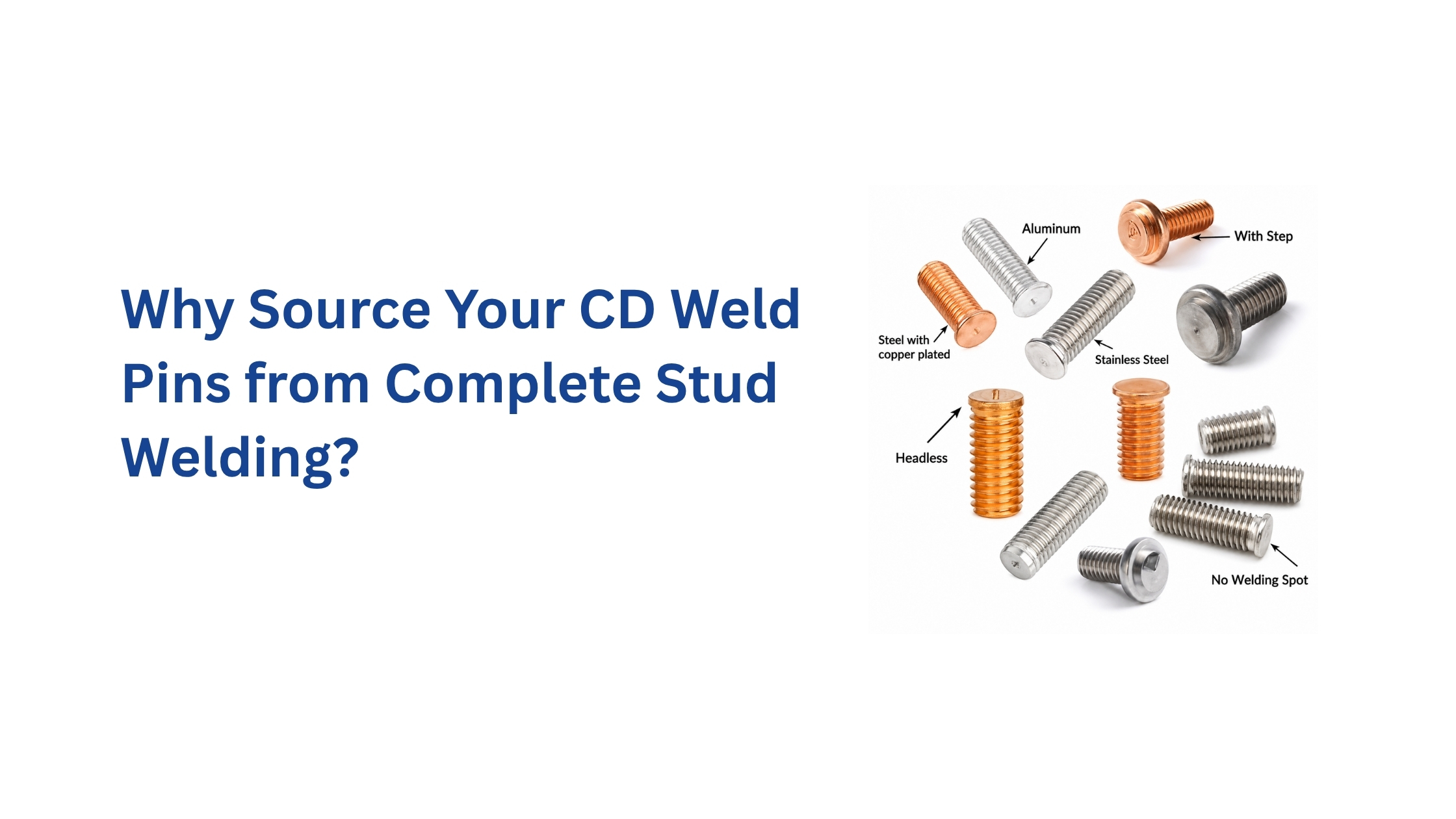
- Low Carbon Steel (Copper Plated): The standard material for most insulation pin welding applications. Cost-effective with excellent weld performance on mild steel base metals.
- Stainless Steel 18-8: Preferred for corrosive environments, food processing facilities, chemical plants, and marine applications where rust resistance is non-negotiable.
- Aluminum: Used when welding to aluminum base metals or where weight reduction is important. Requires a compatible base metal for proper fusion.
- Galvanized & Custom Coatings: Galvanized weld pins and other specialty coatings are available for specific environmental or compliance requirements.
Common Uses of CD Weld Pins
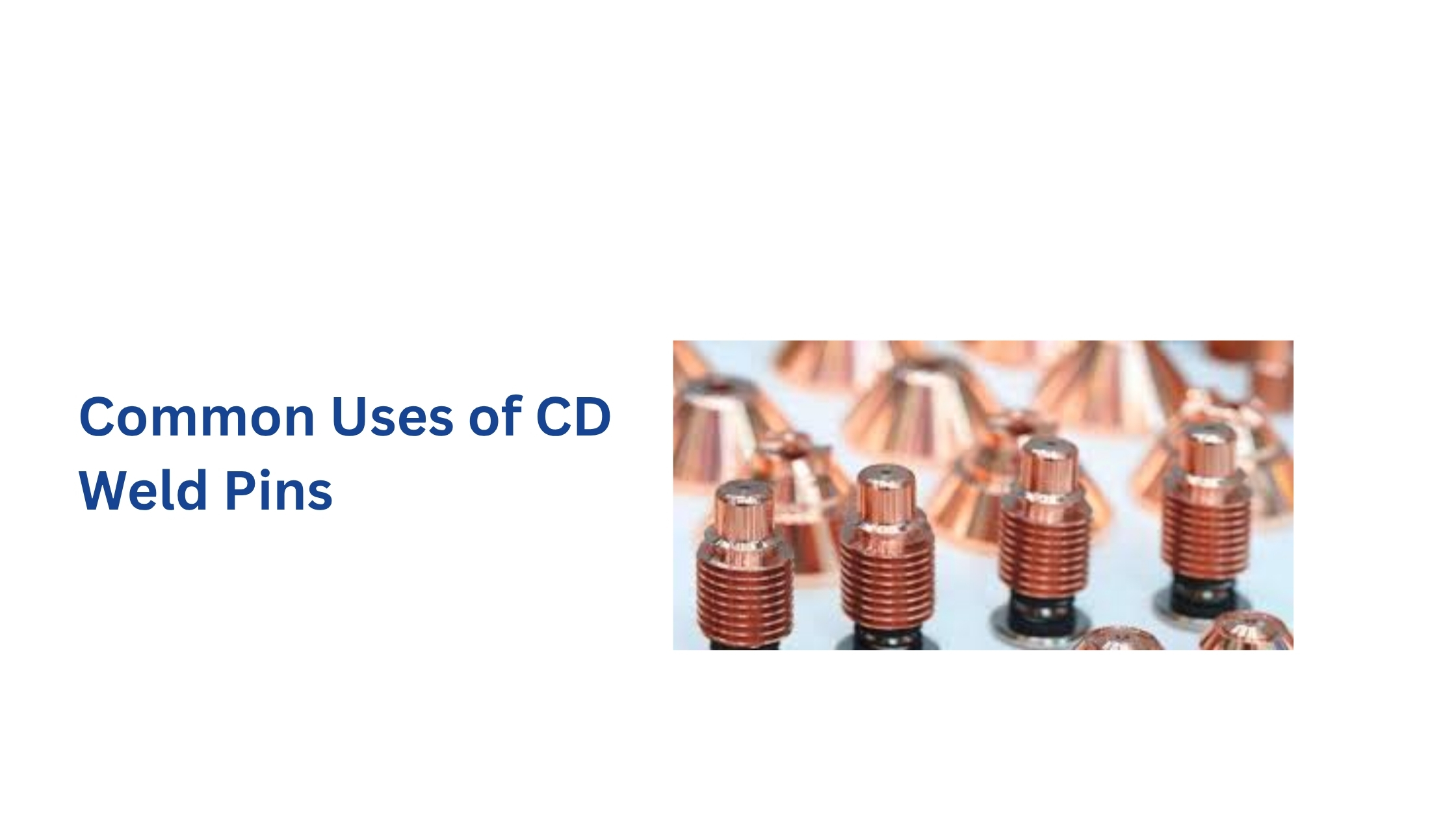
The primary function of weld pins for insulation is exactly what the name suggests — anchoring thermal or acoustic insulation to metal surfaces. The installation workflow is straightforward: the pin is welded to the surface first, the insulation material is then impaled over the pin, and a self-locking washer is pressed over the pin to secure the insulation firmly in place.
Stud welding insulation pins are widely used across many sectors:
- HVAC & Ductwork: Blanket insulation on air handling ducts, plenums, and ventilation systems is routinely secured with CD weld pins, delivering fast installation and long-lasting hold.
- Industrial Ovens & Boilers: High-temperature equipment requires insulation that stays put. CD welding pins withstand vibration and thermal cycling without loosening.
- Cold Storage & Refrigeration Equipment: Insulation on cold storage and refrigeration equipment must be perfectly sealed. CD weld pins provide a flush, secure attachment that prevents moisture ingress.
- Marine & Aerospace: Where weight and surface integrity matter, pin welding offers attachment without drilling or additional hardware.
- Power Generation: Pipework insulation in power plants and industrial facilities uses stud welding pins for reliable, code-compliant installation.
- Automotive Manufacturing: CD stud welding is widely used in automotive assembly for attaching insulation panels, trim components, and small metal brackets.
How Are CD Weld Pins Installed? A Step-by-Step Overview
Installing stud welding insulation pins is a fast, repeatable process when using the right equipment:
- Load the weld pin into the pin welder or insulation pin welder chuck.
- Position the gun at a 90° angle against the clean base metal surface.
- Pull the trigger — the CD welding cycle discharges in milliseconds, fusing the pin to the substrate.
- Verify the weld visually (and with a bend test during setup).
- Impale the insulation blanket or board over the welded pin.
- Press a self-locking washer over the pin to compress and secure the insulation.
An experienced operator using a quality pin welder can easily weld several hundred CD weld pins per hour, making this one of the most efficient insulation fastening methods available in industrial manufacturing today.
CD Weld Pins vs. Other Insulation Fastening Methods
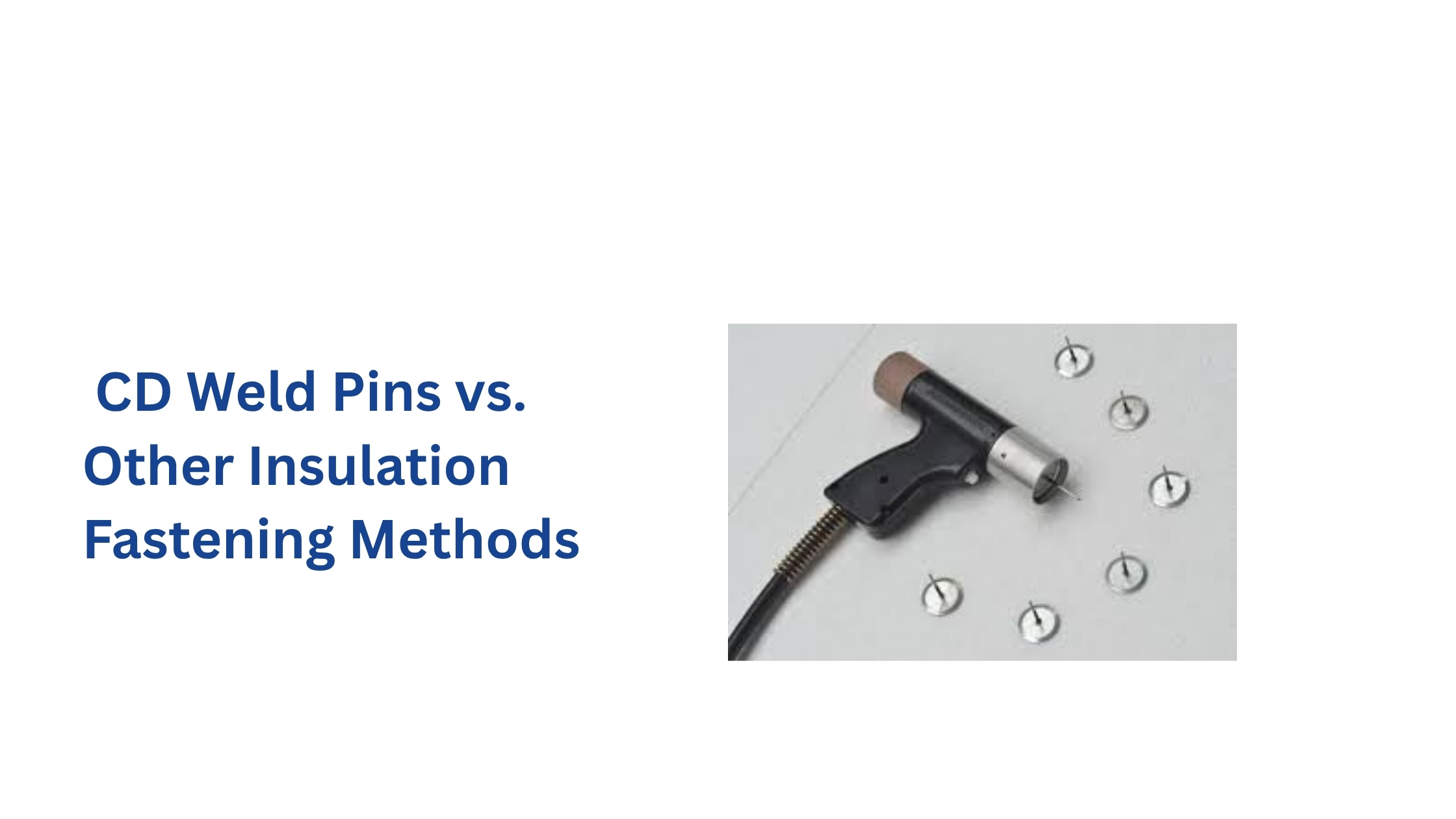
Why choose welding pins over traditional fasteners? Here is a direct comparison:
- vs. Mechanical Screws & Bolts: Screws require pre-drilled holes, which weaken the base material and add labor. CD stud welding produces a one-sided attachment with no hole required.
- vs. Adhesives: Adhesives can degrade at high temperatures, fail under vibration, or release VOCs in enclosed environments. CD weld pins form a permanent metallurgical bond.
- vs. Clip Systems: Clip systems are bulky and can loosen over time. Stud welding insulation pin systems are low-profile, vibration-resistant, and permanently bonded.
- vs. Arc Welding Pins: Arc welding is better suited for thicker base metals and larger fasteners. CD stud welding is purpose-built for thin sheet metal without reverse-side damage — the core advantage of the CD process.
How to Choose the Right CD Weld Pins for Your Application
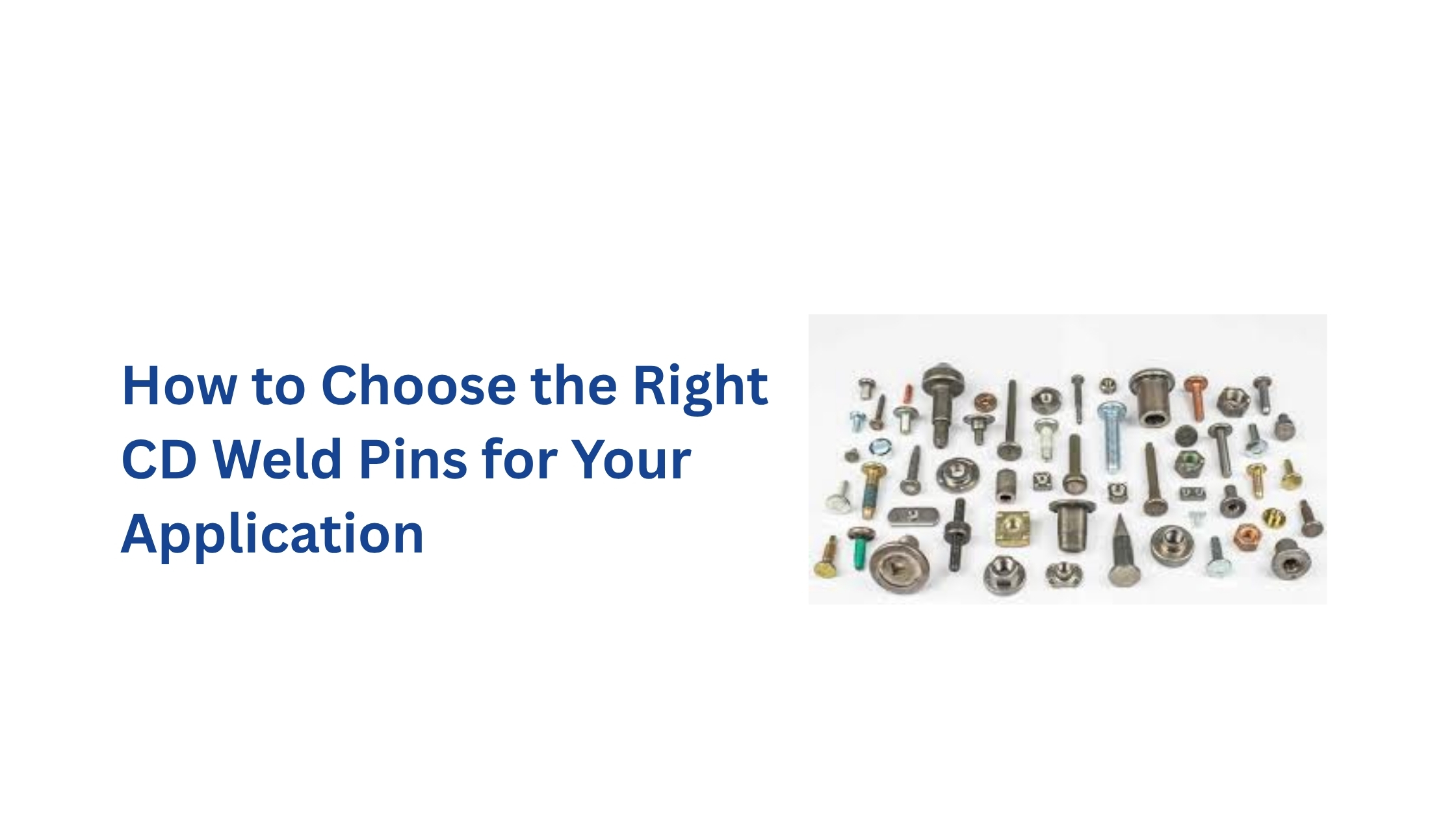
Selecting the correct weld pin starts with understanding your specific application. Consider these key factors:
- Base Metal Type & Thickness: Match pin material to base metal (e.g., stainless pins on stainless steel). The CD process is most effective on sheet metal and plate applications.
- Insulation Thickness: Pin length must exceed insulation thickness to allow the self-locking washer to engage securely. Standard pin lengths range from 0.75″ to 10″.
- Environmental Conditions: In corrosive, wet, or high-temperature environments, opt for stainless steel or galvanized welding pins.
- Load Requirements: Heavier insulation or vertical applications call for 10-gauge pins; 12-gauge pins work well for lighter-duty horizontal or low-stress applications.
- Volume & Production Rate: For high-volume manufacturing, consider auto-feed pin welding equipment to maximize throughput.
Why Source Your CD Weld Pins from Complete Stud Welding?
When it comes to CD weld pins and stud welding pins, the quality of the fastener directly impacts the integrity of your insulation system — and ultimately the performance of your equipment. Complete Stud Welding is a dedicated stud welding specialist with deep expertise in capacitor discharge welding products and systems.
Here is what sets Complete Stud Welding apart:
- Complete Product Range:
From 10 and 12-gauge CD weld pins in multiple materials and lengths, to the full suite of accessories — chucks, collets, self-locking washers, and CD welding equipment — everything you need is available in one place.
- Technical Expertise:
Complete Stud Welding provides dimensional, application, and process guidance to ensure you select the right welding pins and equipment for your specific job.
- Quality Materials:
Pins are available in low-carbon steel (copper-plated), stainless steel 18-8, and aluminum. Custom materials, galvanized options, and specialty coatings are available upon request.
- Equipment Sales & Rental:
Whether you need a pin welder for a one-off project or want to invest in permanent equipment for high-volume production, Complete Stud Welding has the right solution.
- Responsive Support:
From troubleshooting and technical questions to in-shop process training, Complete Stud Welding’s team is ready to support your operations at every stage.
Ready to Order CD Weld Pins?
Whether you are looking for standard capacitor discharge weld pins for an ongoing production line, a custom material specification, or guidance on selecting the right insulation pin welder for your facility, Complete Stud Welding is your trusted partner.
Visit completestudweld.com to browse the full range of CD weld pins, accessories, and equipment — or reach out directly at 216-904-4008 to speak with a stud welding specialist who can help you configure the ideal pin welding solution for your application.
Comments are closed.