
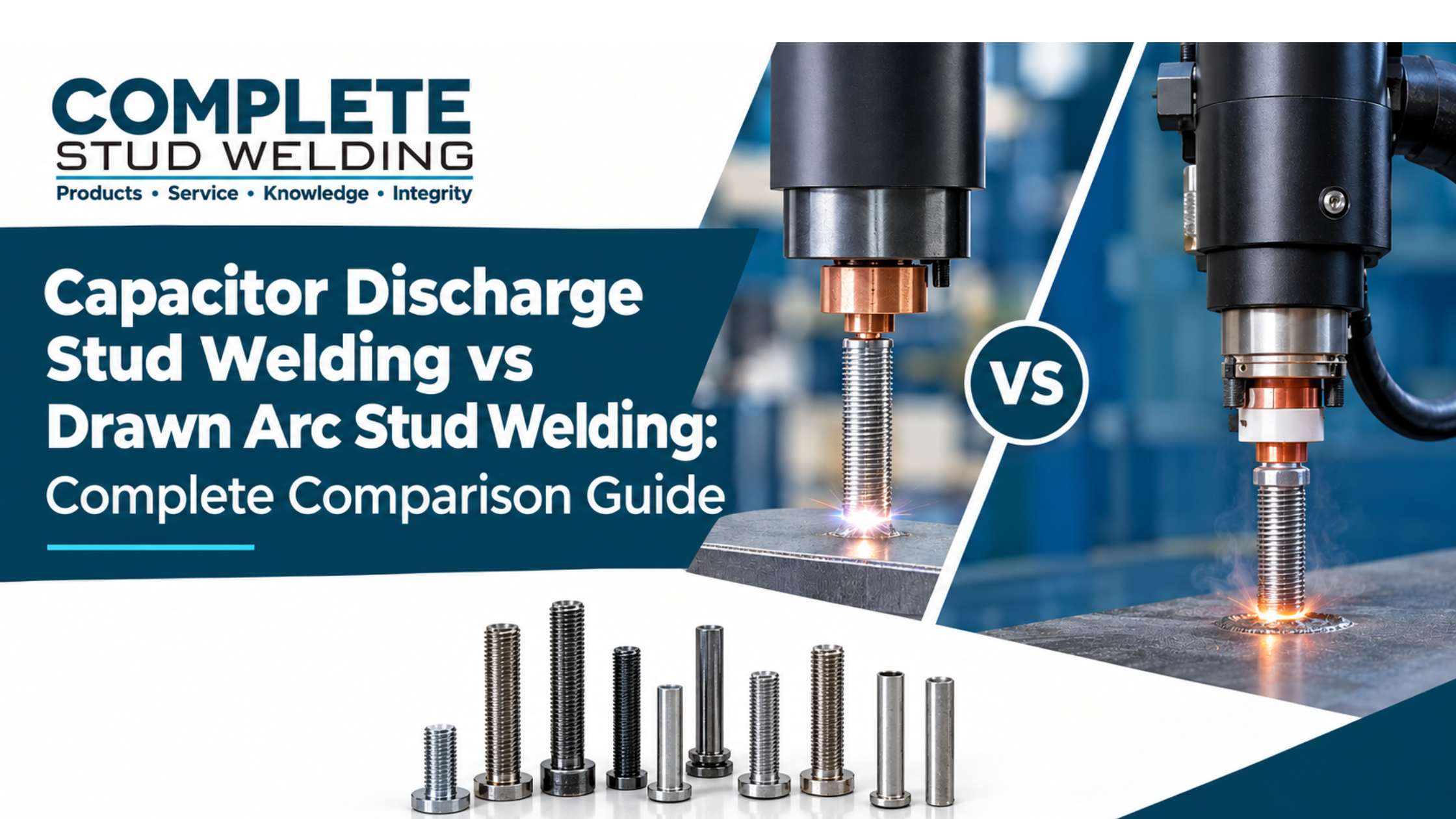
Capacitor discharge stud welding and drawn arc stud welding use different arc and heat-generation principles to permanently attach threaded studs, pins, and other fasteners to metal surfaces. Knowing how arc duration, heat input, weld penetration, and material needs vary helps choose the right stud welding method for each application.
How Capacitor Discharge Stud Welding Works
The capacitor discharge stud welding process stores electrical energy in capacitors before releasing it through the stud. When the stud contacts the prepared workpiece, a controlled electrical discharge creates an arc between the stud tip and base material. The arc rapidly melts the contact surfaces, and spring or mechanical pressure drives the stud into the molten weld zone.
The extremely short discharge minimizes heat transfer into the surrounding material. As a result, capacitor discharge weld studs can be used for applications where limiting distortion, discoloration, and damage to the reverse side of thin material is important.
A capacitor discharge stud welder generally operates without a shielding gas or ceramic ferrule for many applications. Surface condition is still important because excessive paint, rust, oil, or contamination can interfere with consistent electrical contact and weld formation.
How Drawn Arc Stud Welding Works
Drawn arc stud welding uses a controlled arc that is established by lifting the stud away from the workpiece. The welding current melts the end of the stud and a corresponding area of the base metal. The stud is then plunged into the molten pool, allowing the materials to solidify together and form the weld.
A drawn arc stud welding gun controls stud lift, plunge, and positioning during the welding cycle. Depending on the application, ferrules may be used to contain the molten metal and protect the weld area from atmospheric contamination.
Because the process delivers substantially more heat than CD welding, drawn arc weld studs are commonly used where greater weld penetration and robust structural connections are required.
Capacitor Discharge vs Drawn Arc Stud Welding
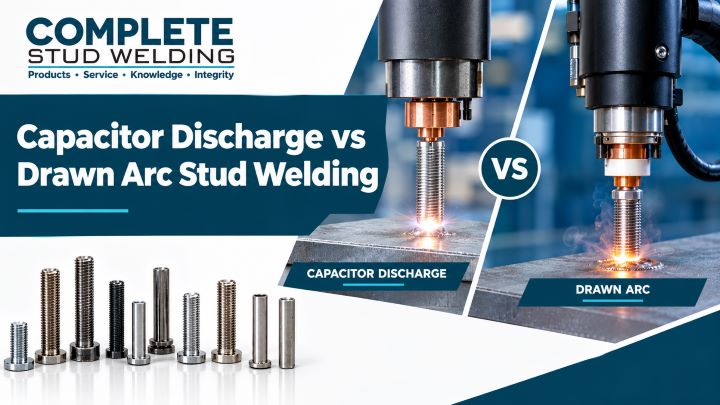
The most important technical difference is heat input and weld formation.
| Factor | Capacitor Discharge | Drawn Arc |
| Arc duration | Very short | Longer controlled cycle |
| Heat input | Low | Higher |
| Heat-affected area | Relatively small | Larger |
| Typical material | Thin sheet and lighter sections | Medium and heavier sections |
| Weld penetration | Relatively shallow | Deeper |
| Surface impact | Low | More noticeable |
| Typical stud sizes | Smaller applications | Wider range, including larger studs |
A capacitor discharge stud welding machine is particularly useful when welding speed and minimal thermal impact are priorities. Drawn arc systems are better for tasks that need more energy for deeper welds and stronger connections.
When to Choose CD Stud Welding
CD stud welding, sometimes called CD stud welding, is well suited to sheet metal, electrical enclosures, automotive components, appliance panels, and similar applications. The short welding cycle can reduce distortion and minimize visible marking on the opposite side of thin material.
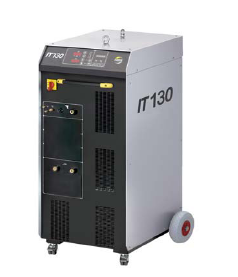
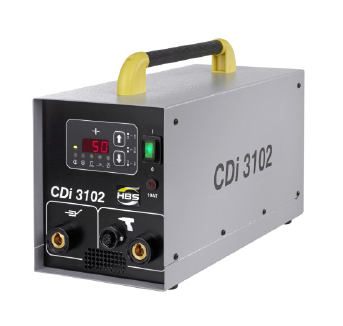
The suitability of a CD stud welder depends on factors such as material type, thickness, stud diameter, surface condition, and required weld performance.
When to Choose Drawn Arc Stud Welding
Drawn arc stud welding is commonly selected for structural steel, construction, shipbuilding, heavy fabrication, and applications involving larger studs or thicker base materials. The higher energy input allows the process to produce deeper and more substantial welds.
The required drawn arc stud welding equipment typically includes a dedicated power source, welding gun, cables, and application-specific studs and ferrules.
Selecting the Right Stud Welding Equipment
The choice between these methods for stud welding should be based on more than welding speed. Material thickness, stud diameter, required penetration, production volume, surface condition, and acceptable heat input all influence equipment selection.
Complete Stud Welding supplies stud welding equipment and can help identify the appropriate stud welding machine, weld studs, and process for your application. Call 216-904-4008 to discuss your stud welding requirements with a professional.

Comments are closed.