
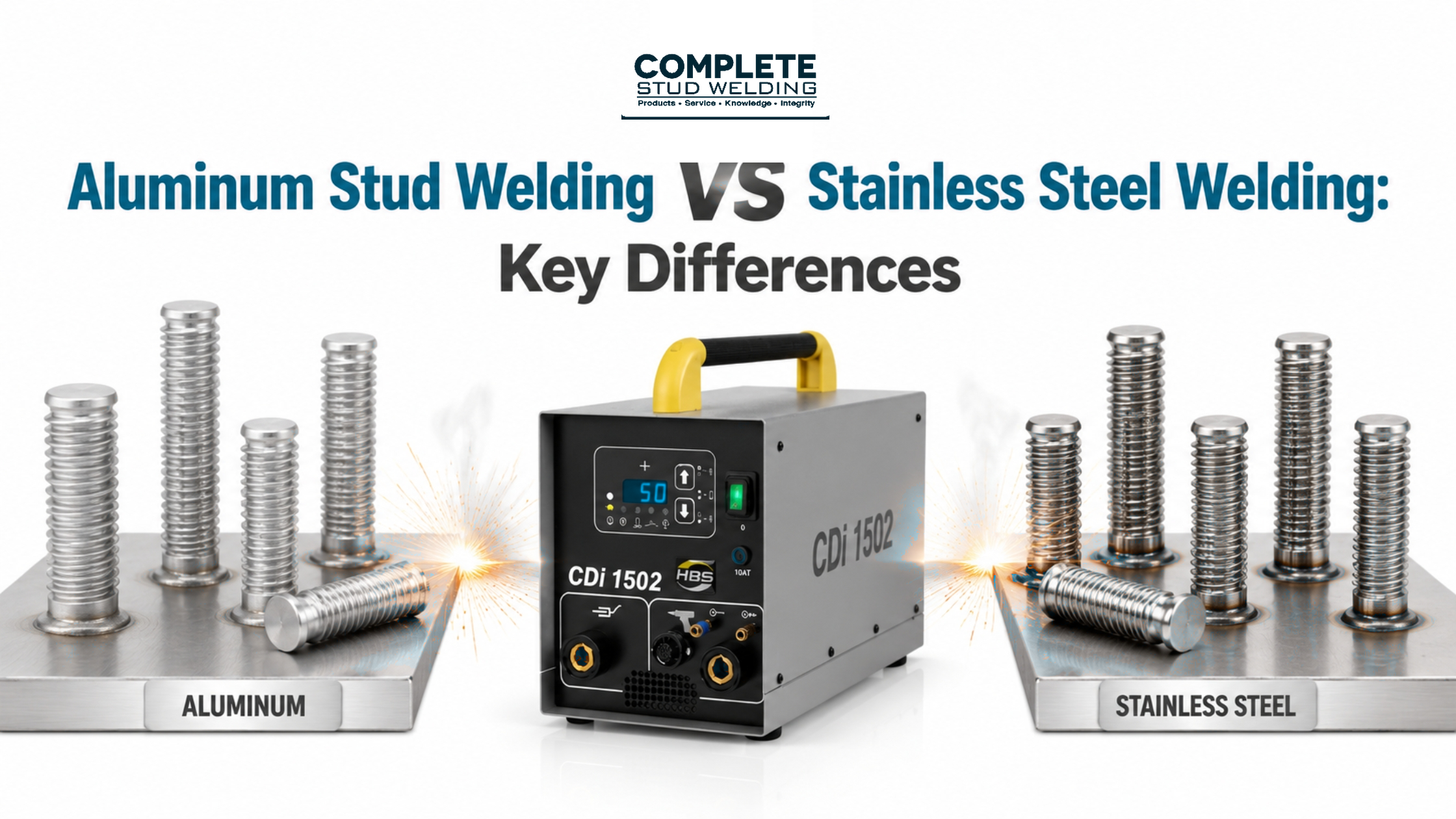
Choosing the right material is critical for achieving strong, reliable welded connections. Aluminum and stainless steel are widely used materials in industrial welding, but their properties create very different welding requirements. Aluminum stud welding offers lightweight, corrosion-resistant connections, while stainless steel welding provides excellent strength, durability, and resistance in harsh environments.
Understanding the differences between these materials helps manufacturers choose the right studs, equipment, and welding process for their applications.
What Is Stud Welding?
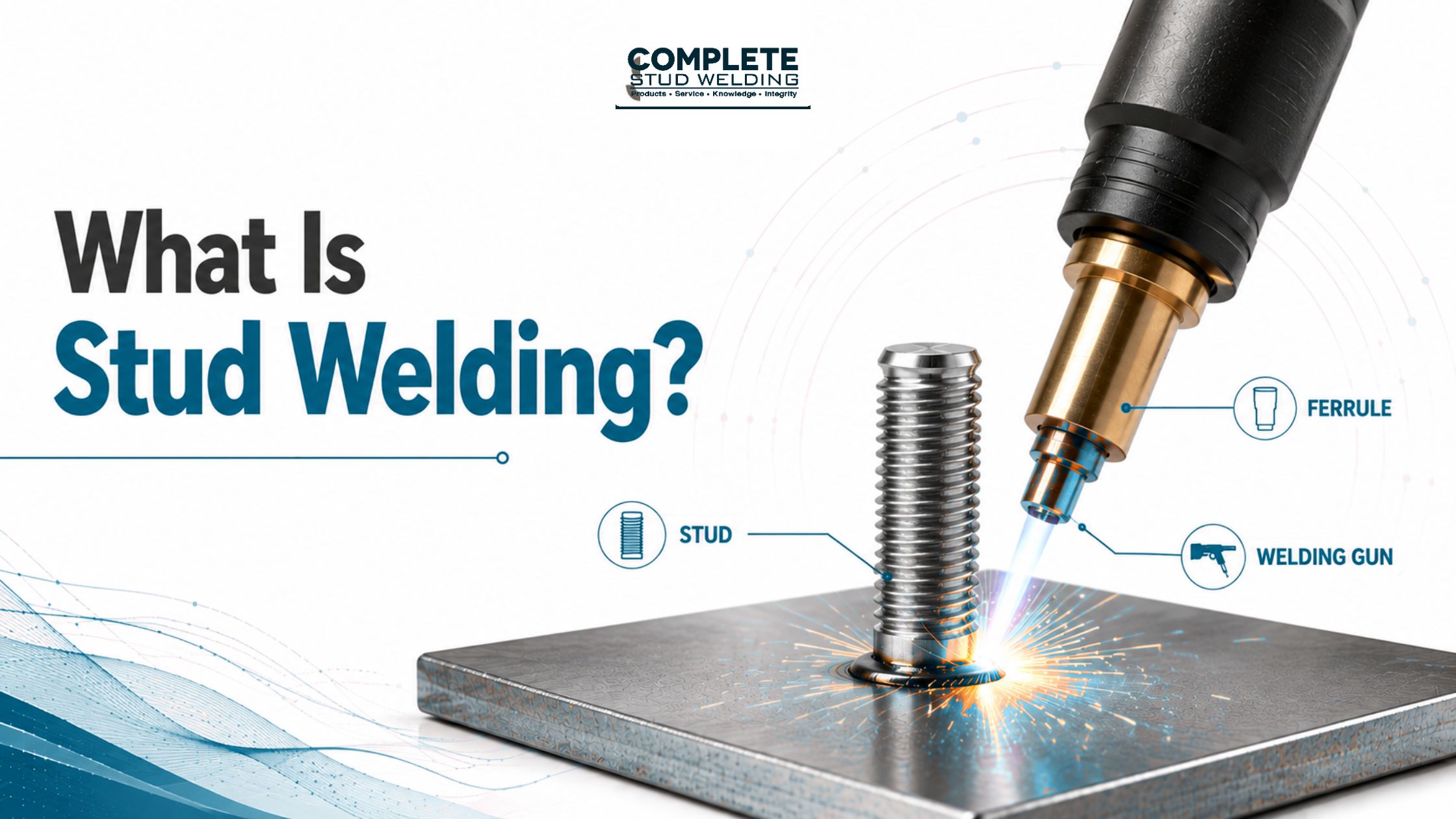
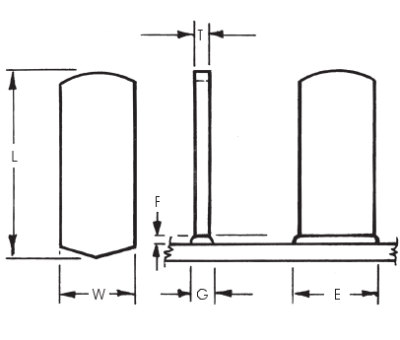
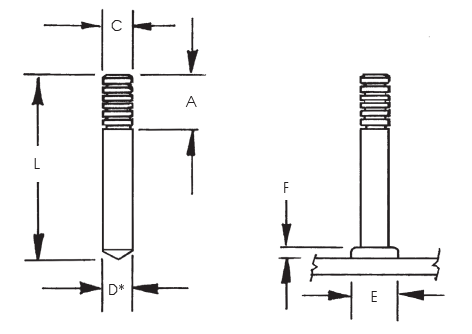
Stud welding is a specialized welding process used to attach metal studs, fasteners, or threaded components directly to a base material. Unlike traditional welding methods that require additional filler material or extensive preparation, stud welding creates a direct fusion connection between the stud and the workpiece.
The most common method for structural applications is ARC stud welding, also known as drawn arc stud welding. The process involves:
- Placing the welding stud against the base metal
- Creating an electrical arc between the stud and surface
- Melting both materials at the weld interface
- Applying pressure to join the materials
- Allowing the weld area to cool and solidify
This process produces strong, repeatable connections for applications ranging from structural steel fabrication to specialized manufacturing.
According to the American Welding Society (AWS), ARC welding processes are widely used because they provide dependable joining methods across construction, transportation, and industrial sectors.
Aluminum Stud Welding Process and Material Considerations
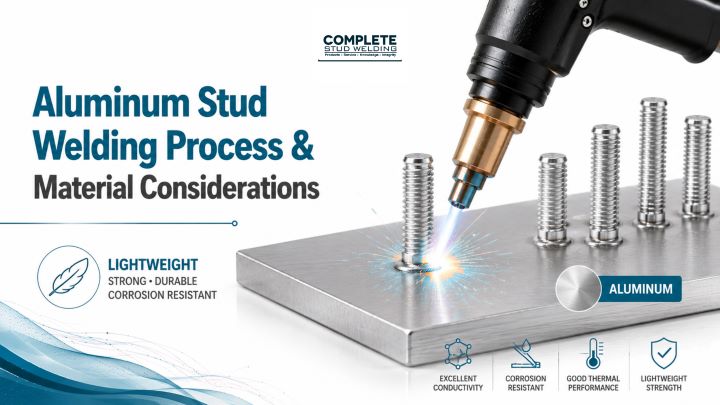
Aluminum stud welding is commonly used in applications where reducing weight, improving corrosion resistance, and maintaining strength are important. However, aluminum behaves differently from steel during welding because of its unique physical properties.
High Thermal Conductivity
Aluminum transfers heat much faster than steel. During welding, heat can quickly move away from the weld zone, making temperature control more challenging. A proper aluminum stud welder must provide accurate control over:
- Welding current
- Arc duration
- Stud movement
- Heat input
Incorrect settings can result in incomplete fusion or inconsistent weld quality.
Aluminum Oxide Layer
One of the biggest challenges when stud welding aluminum is the natural oxide layer that forms on the surface. This oxide layer:
- Has a higher melting point than aluminum
- Can interfere with fusion
- Requires proper surface preparation
Correct cleaning and welding parameters help ensure a strong connection between aluminum weld studs and the base material.
Lightweight Performance
The main advantage of aluminum is its high strength-to-weight ratio. Compared with steel, aluminum offers:
- Lower overall weight
- Good corrosion resistance
- Excellent conductivity
- Improved efficiency for lightweight designs
Stainless Steel Welding: Strength and Corrosion Resistance
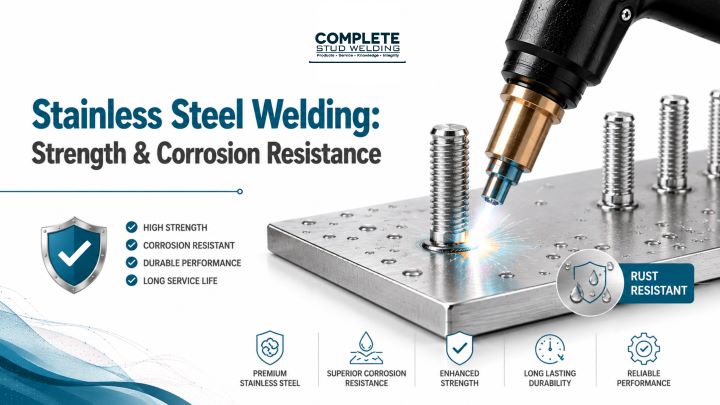
Stainless steel welding is widely used when durability, strength, and corrosion resistance are critical. Unlike aluminum, stainless steel contains chromium, which creates a passive surface layer that protects the material from corrosion. A stainless steel stud welder is commonly used for applications requiring long-term performance in challenging environments.
Common applications include:
- Food processing equipment
- Chemical processing facilities
- Marine structures
- Industrial machinery
- Outdoor installations
Stainless Steel Stud Welding Considerations
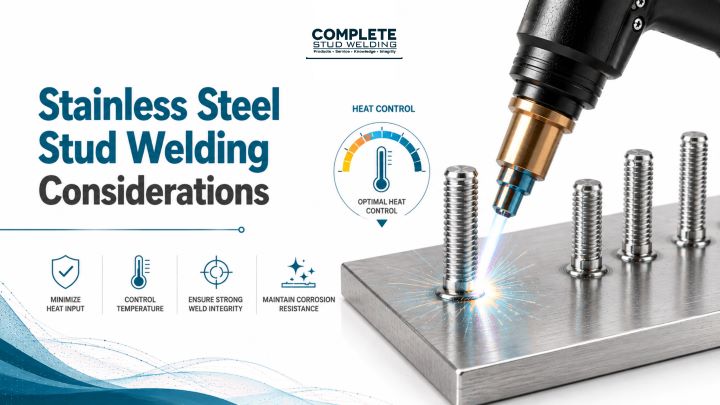
Stainless steel stud welding requires proper heat management to maintain the material’s corrosion-resistant properties. Important factors include:
Heat Control
Excessive heat can affect stainless steel’s surface characteristics and may reduce corrosion resistance.
Material Compatibility
The welding stud and base material should be properly matched to prevent performance issues.
Surface Preparation
Oil, dirt, coatings, or contamination can affect weld quality. Proper preparation helps create consistent connections.
Aluminum Stud Welding vs Stainless Steel Welding: Technical Comparison
| Feature | Aluminum Stud Welding | Stainless Steel Welding |
| Weight | Lightweight | Heavier |
| Strength | High strength-to-weight ratio | Higher overall strength |
| Corrosion Resistance | Excellent | Excellent |
| Thermal Conductivity | High | Lower |
| Welding Control | Requires precise settings | More stable process |
| Common Applications | Aerospace, marine, transportation | Industrial, chemical, structural applications |
Aluminum Stud Welding Machine vs Stainless Steel Welding Equipment
Choosing the correct equipment is essential for achieving reliable welds.
Aluminum Stud Welding Machine Requirements
An aluminum stud welding machine requires precise control because aluminum responds quickly to heat fluxes. Important equipment features include:
- Adjustable welding current
- Stable arc control
- Correct stud compatibility
- Consistent timing control
Complete Stud Welding provides industrial-grade aluminum welding equipment and stud welding solutions for specialized applications.
Stainless Steel Stud Welding Equipment
Stainless steel applications typically require equipment capable of maintaining consistent weld parameters while controlling heat input. A reliable stainless steel stud welder setup may include:
- Stud welding power supply
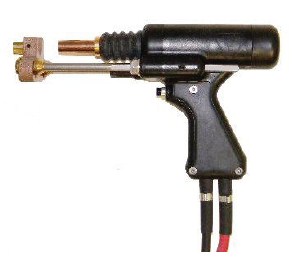
- Welding gun
- Ground connections
- Compatible welding studs
- Proper accessories
Aluminum Weld Studs vs Stainless Steel Welding Studs
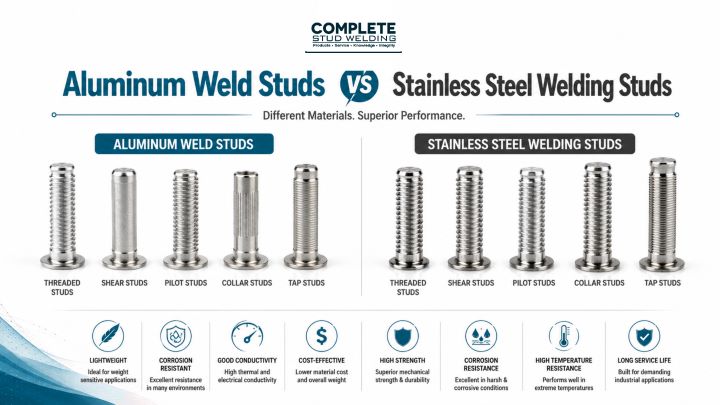
Selecting the correct stud material is critical for weld performance.
Aluminum Weld Studs
Aluminum weld studs are ideal for applications where:
- Weight reduction is important
- Corrosion resistance is required
- Electrical conductivity matters
Common industries include:
- Aerospace
- Automotive
- Marine
- Transportation
Stainless Steel Welding Studs
Stainless steel welding studs are preferred for applications requiring:
- Higher durability
- Chemical resistance
- Long service life
- Harsh environment performance
Common industries include:
- Energy
- Food processing
- Manufacturing
- Industrial equipment
Applications of Aluminum and Stainless Steel Stud Welding
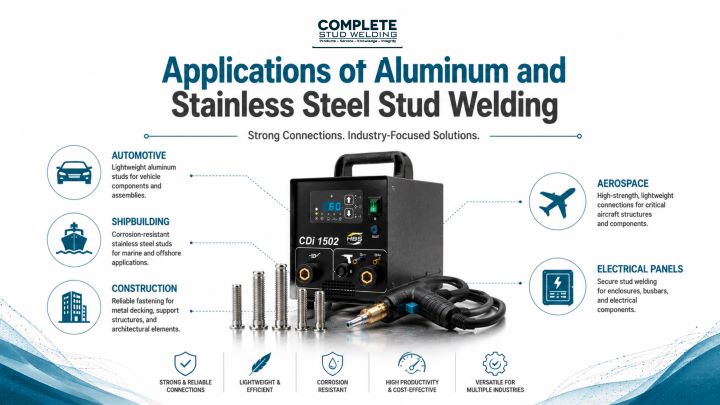
Both materials serve different purposes depending on project requirements.
Aluminum Stud Welding Applications
Aluminum stud welding is commonly used for:
- Lightweight vehicle components
- Marine structures
- Aerospace assemblies
- Electrical equipment
Stainless Steel Welding Applications
Stainless steel welding is commonly used for:
- Processing equipment
- Structural components
- Corrosion-resistant assemblies
- Industrial systems
Mild Steel Stud Welding Applications
Traditional steel stud welding remains widely used for:
- Structural steel buildings
- Bridges
- Composite construction
- Heavy industrial projects
Steel is, however, preferred where maximum strength and load capacity are required.
Choosing Between Aluminum and Stainless Steel Welding
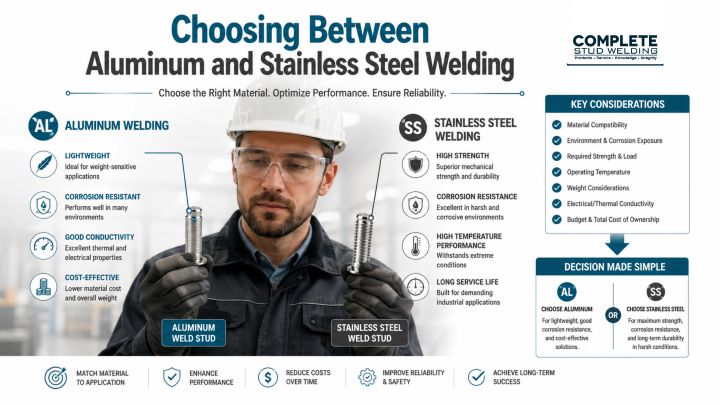
The correct choice depends on the project requirements.
Choose Aluminum When:
- Weight reduction is a priority
- Corrosion resistance is needed
- Lightweight structures are required
Choose Stainless Steel When:
- Maximum durability is needed
- The environment is harsh
- Long-term corrosion resistance is required
Engineers and fabricators should consider:
- Material properties
- Operating environment
- Load requirements
- Welding equipment availability
- Long-term performance expectations
Why Proper Stud Welding Equipment Matters
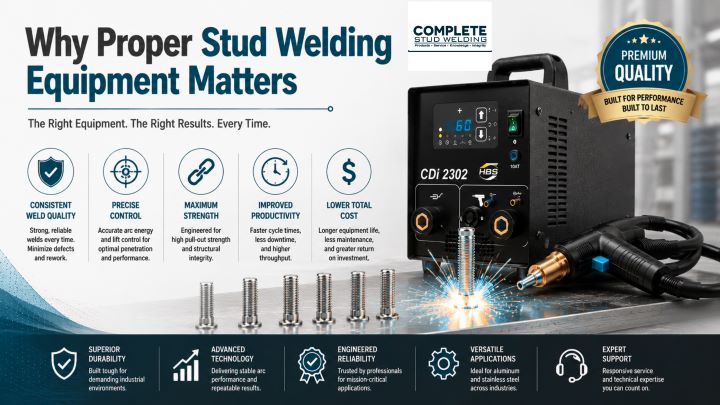
Regardless of the material, welding quality depends on using the correct equipment and process settings. A complete stud welding machine setup helps maintain:
- Consistent weld penetration
- Repeatable results
- Reduced defects
- Improved productivity
Complete Stud Welding supplies ARC stud welding equipment, welding studs, and accessories for a wide range of industrial applications.
Why Choose Complete Stud Welding?
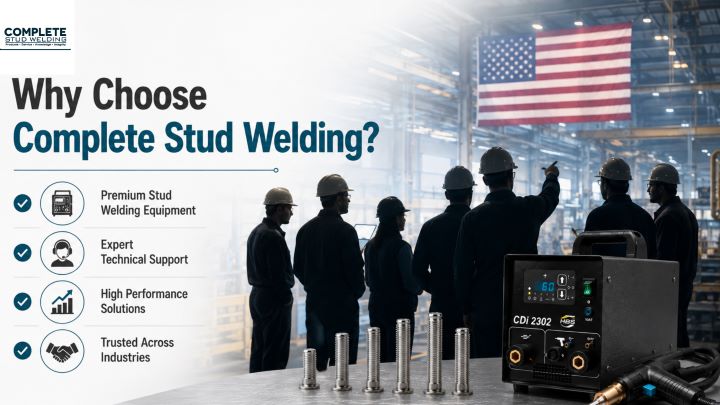
Selecting the right welding solution requires experience with materials, equipment, and application requirements. Complete Stud Welding supports customers with:
- Professional stud welding machines
- Aluminum and stainless steel welding solutions
- Welding studs and accessories
- Technical product guidance
Our team helps contractors, manufacturers, and fabricators select the right equipment for reliable welded connections.
Final Thoughts
Both aluminum and stainless steel provide valuable advantages, but they serve different purposes. Aluminum stud welding is ideal for lightweight, corrosion-resistant applications, while stainless steel welding delivers strength and durability for demanding environments. Choosing the correct material, equipment, and welding process ensures stronger connections and better long-term performance.
Need Expert Stud Welding Solutions? Complete Stud Welding provides both reliable aluminum welding equipment, stainless steel welding solutions, and professional stud welding products for industrial applications. Call Complete Stud Welding at 216-904-4008 today for reliable welding solutions for demanding projects.

Comments are closed.