
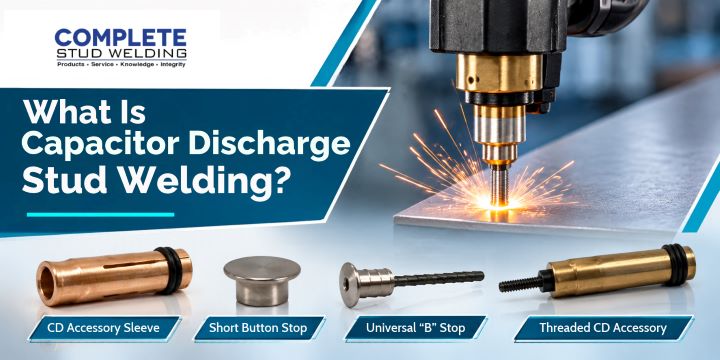
Capacitor discharge stud welding is a method for attaching small studs to metal sheets. A capacitor discharge stud welder stores electrical energy and releases it in one short burst. The burst melts the tip of the stud and a small spot on the base metal. The stud is then pressed into the molten spot, and the weld cools in moments.
Many shops use CD stud welding because it creates a solid weld without marking the back of the sheet.
How Does The CD Stud Welding Process Work?
The CD stud welding process follows the same steps every time.
- The operator loads a stud into the welding gun.
- The operator sets the voltage on the machine.
- The capacitors charge to that level.
- The operator places the stud against clean base metal and pulls the trigger.
- The stored energy discharges and forms an arc at the stud tip.
- The gun pushes the stud into the molten metal, and the weld cools.
According to a U.S. patent record, the full weld cycle lasts about 0.003 seconds. The same record notes that current at the stud tip can briefly reach about 10 million amps per square inch. This short, intense burst is what sets the method apart.
Why Does The Short Weld Time Matter?
Drawn arc welding is a longer process. A second U.S. patent record lists about 0.5 seconds for a half-inch stud. That extra time sends more heat into the base metal. Thin sheets can warp or burn through under that much heat. CD welding finishes so fast that very little heat spreads, so the panel stays flat and the surface stays clean.
How Does The Stud Tip Start The Arc?
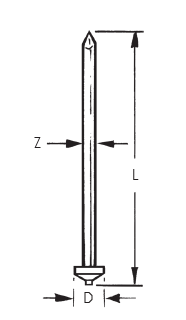
Each stud has a small tip on the weld end. The tip melts and evaporates the moment the current flows. An arc then forms across the weld area and creates a shallow pool. The gun plunges the stud into that pool before it cools.
Where CD Stud Welding Is Used?
This method works well when a thin panel needs a fastener and the back side must stay clean. Common uses include:
- Electronics enclosures that need grounding studs
- Appliance and furniture panels that need pins or brackets
- Automotive and aerospace parts made from thin metal
- Signs and nameplates where the front face must stay unmarked
NASA publishes a stud welding process specification that covers both capacitor discharge and drawn arc methods.
What CD Stud Welding Equipment Do You Need?
Every setup shares a few core parts.
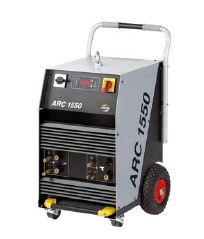
- A capacitor discharge stud welding machine charges and stores the energy.
- A CD stud welder gun holds the stud and fires the weld.
- A ground cable and clamp complete the circuit.
- Controls let you adjust voltage and capacitance for each job.
- Capacitor discharge weld studs supply the fastener itself.
What Are Capacitor Discharge Weld Studs?
These studs carry a small tip on the weld end. The tip starts the arc and burns away during the weld. Most are 1/4 inch or smaller in diameter. You can find them in steel, stainless steel, brass, and aluminum.
Pros and Cons of CD Stud Welding
Benefits of CD Stud Welding
Low Heat Input
- The weld time is very short, so little heat reaches the base metal.
- Thin sheet metal stays flat with little burn-through.
Clean Back Side
- The process leaves the back of the sheet free of heavy marks.
- Finished or coated panels need less rework after welding.
No Extra Consumables
- The process needs no ceramic ferrule or flux.
- Fewer supplies mean simpler setup and less cleanup.
Fast Production
- Each weld finishes in a fraction of a second.
- Production runs move quickly, even with many studs per panel.
CD Stud Welding Limitations
Lower Weld Strength
- The patent record mentioned earlier says CD weld strength is somewhat lower than arc welding.
- Choose drawn arc welding when a job needs the highest strength.
Small Stud Sizes
- The studs stay small, usually 1/4 inch or less.
- Larger fasteners call for a different stud welding method.
Clean and Flat Surface Needed
- The base metal must be clean and flat for a good weld.
- Remove oil, rust, and dirt before every weld.
How to Choose the Right Setup
The American Welding Society publishes recommended practice C5.4 for stud welding. It covers method selection, stud design, equipment, quality control, and troubleshooting. These checks will help you start.
- Match the stud size to the thickness of the sheet.
- Confirm the base metal type, such as steel, stainless steel, or aluminum.
- Clean the surface before each weld.
- Run test welds and check them with a bend or torque test.
Talk to Complete Stud Welding
Complete Stud Welding helps shops choose the right CD stud welding equipment and studs. You can browse our TW-i series at completestudweld.com. Call 216-904-4008 to discuss your project with our team.

Comments are closed.